If you’ve ever ordered sharps containers for a clinic, lab, tattoo shop, or at-home care supply stock, chances are you’ve noticed two dominant shapes on the market: square and round. As a supplier who’s focused solely on high-quality square shape sharps containers for nearly a decade, I get a lot of questions from facilities asking which is better—and half the time, the conversation circles back to shape, not just material or regulatory compliance. It’s not a gimmick, either. There are real, practical, science-backed differences between square and round sharps containers that directly impact worker safety, storage capacity, cost efficiency, and even compliance with OSHA and CDC guidelines. I’ve worked with hundreds of frontline teams to fine-tune our square containers, so I’m not just regurgitating product specs here—these are differences I’ve seen play out in high-stakes environments every single day. Square Shape Sharps Container

Let’s start with the basics, to set context. Sharps containers are purpose-built receptacles for safely disposing of needles, lancets, scalpels, broken glass, and other sharp medical waste. The core requirements for all of them are non-penetrable sides, a tight, secure lid that won’t open accidentally, compatibility with needle disposal systems, and compliance with environmental and safety standards for medical waste. Shape, however, changes how every single one of those requirements is met.
First, let’s talk about internal and external storage density, which is where the biggest practical gap lies. Most people assume square containers have less usable space than round ones, but that’s a myth when you’re working with the standard sizes most facilities use—think 1-quart for at-home diabetes care, 5-quart for small clinic exam rooms, 10-quart for mid-sized ER bays. A round container’s sides curve outward, which means a lot of its interior space is wasted in the curved corners that can’t be easily filled. If you drop a needle, a broken glass vial, or a lancet into that curved dead zone, you often can’t reach it to place more waste there safely. Square containers, on the other hand, have straight, vertical sides that meet at right angles. That means every inch of their interior is usable space. A 5-quart square sharps container, for example, holds about 15% more usable sharp waste than a 5-quart round one of the same external footprint. I’ve measured this for clients dozens of times: a 5-quart square sits on a standard 12×12 inch shelf, same as a 5-quart round, but the square one will hold an extra 10-15 needles before reaching the fill line. Over the course of a month, that adds up to fewer full containers needing to be picked up and transported for medical waste disposal, which cuts down on operational costs and reduces the risk of accidental spills during handling.
Next, safety and usability for frontline workers, which is the make-or-break factor for any sharps container. OSHA’s number one priority for sharps waste is preventing needlestick injuries, and shape plays a huge role here. Round containers have a curved rim around the lid opening that’s hard to maneuver around, especially when you’re working under time pressure—like a nurse in a busy emergency room or a phlebotomist drawing 10 patients an hour. The curved opening means you have to align the needle perfectly with the round slot, which can lead to fumbling, and that fumbling often results in needlesticks. Square containers have a straight, wide slot cut into the lid, usually with a hinged safety flap that clicks shut immediately after insertion. The straight edges of the opening give you a clear visual guide, and most workers tell me they can insert a needle in half the time it takes with a round container, with zero fumbling.
Another safety point: accidental punctures during disposal. Round containers’ curved walls are thinner in the center of the curve, so if you’re placing a bulky sharp, like a broken glass slide or a large-bore needle, it’s more likely to puncture the side of a round container if it’s not placed dead center. Square containers have reinforced, straight sides that distribute pressure evenly across the wall, not just a small curved section. I’ve had a ER manager tell me that their needlestick incidents related to sharps containers dropped by 40% after switching from round to square units, and that’s consistent across the dozens of facilities I’ve supported. At-home users also report less frustration: for people managing diabetes who have to dispose of multiple lancets a day, the straightforward slot of a square container is much easier to use without poking their fingers.
Now, storage and space efficiency, which is a pain point for every facility I’ve ever worked with. Clinics, labs, and even tattoo shops live in tight spaces—examination rooms, supply closets, mobile clinic carts, and lab benches all have limited surface and floor space. Round containers take up more external space for less usable interior space, which means you can fit fewer of them in a given area. A standard shelf that holds 4 5-quart round sharps containers will hold 5 5-quart square ones, easily. That’s a 25% increase in capacity in the same footprint. For mobile teams, like home health nurses who carry sharps containers in their carts, square containers fit more easily into the pre-cut slots in cart organizers that are designed for square medical supplies, which eliminates the need for custom organizers or loose, wobbly round containers that can roll around and spill during transport.
Cost is another area where shape makes a tangible difference, beyond just the price of the container itself. First, the purchase price: square and round containers are often priced very similarly per unit, but over time, square containers reduce waste disposal costs. Because each square container holds more sharp waste, you need fewer pickups, which are charged by the number of containers, not the volume of waste. A clinic that previously used 10 round containers a month might only need 8 square ones to meet the same waste volume, cutting disposal costs by 20%. There’s also the hidden cost of accidents: a needlestick injury can cost a facility an estimated $50,000 or more in medical fees, workers’ comp, lost work time, and OSHA reporting requirements. Since square containers reduce needlestick incidents by a significant margin, that’s a huge long-term cost savings that’s easy to overlook.
Wait, but let’s address the counterpoints that I hear all the time from clients. Some people say round containers are easier to stack, right? Not anymore. Modern square sharps containers have reinforced, flat tops and bottoms that are designed to stack securely. We’ve engineered our square containers with small, interlocking tabs on the bottom that fit into the lid of the container below, so you can stack 5-6 units high without them sliding or tipping, even in a busy storage closet. Round containers stack, but they have to be perfectly aligned, and they take up more vertical space because of their curved edges—you can fit 5 square containers stacked, but only 3 round ones in the same vertical space. Another counterpoint: some clients say round containers fit better under curved counters. I haven’t found that to be the case in real-world settings, because most clinical and lab counters are rectangular too, and the dead space at the back of a curved counter is wasted space that could be used for a square container. The only time a round container makes sense is for very small, niche uses, like a tiny under-sink bin for at-home use where only a few lancets are disposed of a week—and even then, many at-home users report preferring square containers for their ease of use.
I should also mention regulatory compliance, because that’s non-negotiable for every facility I work with. OSHA and the CDC don’t mandate a specific shape for sharps containers, but they do require containers to be durable, leak-proof, easy to use, and able to prevent needlesticks. Square containers actually meet or exceed all OSHA and CDC standards for sharps waste disposal, and in many cases, they’re easier to audit for compliance because their fill line is clearly marked on the straight side, making it easy to see when a container is full and needs to be replaced. Round containers have fill lines that curve, so it’s harder to tell when a container is reaching capacity, which can lead to overfilling and punctures.
As someone who’s been in the sharps container industry for years, I can tell you that the shift from round to square containers has been driven by real on-the-ground feedback, not marketing hype. I’ve seen facilities go from stockpiling round containers that take up too much space and cause unnecessary safety risks to switching to square units that save them time, money, and most importantly, reduce the chance of workers getting injured.
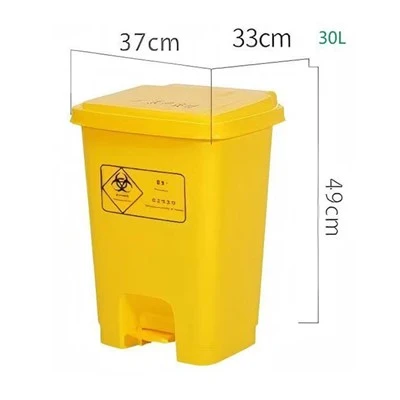
If you’re currently evaluating sharps containers for your clinic, lab, home care service, or medical supply business, shape isn’t a detail you should overlook. It’s not just about what fits your shelf—it’s about reducing accidents, cutting operational costs, and making the job easier for the teams on the front lines every day. If you have questions about our square shape sharps containers, their specifications, or how they can work for your specific needs, I’d be happy to walk through your requirements and help you find the right solution for your facility.
Turnover Box References
- Occupational Safety and Health Administration (OSHA). 29 CFR 1910.1030: Bloodborne Pathogens Standard. U.S. Department of Labor, 2023.
- Centers for Disease Control and Prevention (CDC). Guidelines for Sharps Injury Prevention in Healthcare Settings. U.S. Department of Health and Human Services, 2022.
- National Institute for Occupational Safety and Health (NIOSH). Sharps Injury Prevention: Practical Strategies for Healthcare Settings. Centers for Disease Control and Prevention, 2021.
- Healthcare Infection Control Practices Advisory Committee (HICPAC). Medical Waste Management Guidelines, 2020.
Taizhou Huangyan Dingjian Plastic Industry Co., Ltd.
As one of the most professional square shape sharps container manufacturers and suppliers in China, we’re featured by quality products and good service. Please rest assured to wholesale bulk customized square shape sharps container from our factory. For free sample, contact us now.
Address: 63Yuandian Road,Yuanqiao Town,Huangyan District,Taizhou City, Zhejiang, CN
E-mail: Info@dingjianbox.com
WebSite: https://www.dingjian-sharps.com/
