If you’ve ever worked in commercial electrical infrastructure, you know that even one power surge can wipe out weeks of server data, fry sensitive industrial control systems, or shut down a retail location’s POS systems mid-day. As someone who’s spent the last 12 years designing, testing, and installing T1 50KA Surge Protective Devices (SPDs) for businesses across North America, I’ve seen countless operations cut corners on their surge protection—only to end up with costly, preventable downtime. A T1 50KA unit isn’t just a box you plug into your electrical panel and forget about; it’s a precision tool that requires intentional setup, regular care, and proactive monitoring to work as intended. In this post, I’m breaking down the actionable, science-backed steps I share with every client who buys our T1 50KA SPDs, so you can be confident your device is operating at peak performance for years. T1 50KA Surge Protective Device

First, let’s cut through the sales fluff and ground this in why a T1 50KA rating matters (it’s not just a number on a spec sheet). T1 refers to the voltage class: specifically, this is a Type 1 SPD, designed to be installed at the main service entrance of a building, right after the utility power meter. Its 50kA rating means it can safely divert up to 50,000 amps of transient surge current away from your sensitive loads—something lower-rated Type 2 or Type 3 SPDs can’t handle during the big surges that come from lightning strikes, utility grid switching, or transformer faults. A lot of clients ask me: “Why not just use a cheaper, lower-rated SPD?” The answer is simple: I’ve replaced T1 50KA units that failed to protect a client’s servers, and every single time, the root cause was not just a bad unit, but improper installation or neglect of the critical early steps that make these devices work.
The very first step to ensuring proper operation, and the one most people skip, is verifying that your installation environment matches the T1 50KA’s requirements before the unit even arrives. This isn’t just checking “there’s space for it” on your panel—it’s confirming three key factors: panel compatibility, ambient temperature, and electrical isolation. T1 50KA SPDs are rated for indoor installation only, and they require a maximum ambient operating temperature of 40°C (104°F). I once had a client in Texas install their T1 50KA in a panel in a utility closet that hit 52°C in the summer; within six months, the unit’s metal oxide varistors (MOVs)—the core component that absorbs surges—degraded 30% faster than specified. MOVs are heat-sensitive, and excess heat accelerates their wear, making them less effective over time. Next, panel compatibility: your main electrical panel must have a dedicated, easily accessible space for Type 1 SPDs, and the panel’s main breaker must be rated for at least 200A (the standard for most commercial buildings) to support the inrush current during a large surge. I also advise clients to confirm that the panel is properly grounded to a licensed grounding electrode system (GES) per NEC Article 250; a weak or improper ground connection will render even the best T1 50KA useless, because the surge can’t divert safely to earth. I always provide a pre-installation checklists for every client, and we do a free virtual walkthrough of the panel area before we ship any units—this small step has cut premature unit failures by 60% for my clients.
Once the unit arrives, proper installation is non-negotiable, and it’s not a job for an unlicensed handyman. T1 50KA SPDs follow strict wiring rules per NEC Article 285 and UL 1449 standards, and cutting corners here is a recipe for failure. First, wire the SPD directly to the main service entrance conductors, between the utility feed and the main disconnect. Never tap into a branch circuit, and never install it after the main breaker—Type 1 SPDs need to be the first line of defense, so they can intercept surges before they travel through the rest of the building’s wiring. Next, pay attention to wire gauge: for a 50kA T1 SPD, you need at least 6 AWG copper conductors for the line (L1, L2, L3) and neutral connections, and a 4 AWG copper conductor for the ground connection. Using smaller wire, like 10 AWG, increases resistance, which means the surge won’t divert efficiently and will instead back up into your loads. I’ve seen a client use 12 AWG wire, and during a small lightning surge, that wire heated up to the point of melting, taking half their panel with it. That’s not a failure of the T1 50KA—it was a failure of installation. Another key step here is tightening all connection points to the manufacturer’s specified torque (usually 15 lb-in for line and neutral, 25 lb-in for ground) to prevent loose connections, which cause arcing and degrade performance over time. Finally, make sure the unit is mounted with enough clearance (at least 6 inches above and below) for airflow, which keeps the MOVs cool and prevents overheating during surge events.
After installation, the next critical step is testing your T1 50KA SPD immediately after setup, and then at regular intervals, because a unit that looks fine on the outside could be completely non-functional on the inside. Most clients don’t know that SPDs degrade gradually—even if they never experience a major surge, small surges from utility grid switching wear down the MOVs over time, and they need to be tested to confirm they’re still working. The proper test for a T1 50KA is a combination of visual inspection and electrical testing. First, the visual check: look at the status indicator on the unit—our T1 50KA has a bright green LED that’s lit when the unit is functional, and turns amber or red when it’s degraded or failed. If the LED is red, that’s an immediate replacement need, because the MOVs have reached their end of life and can’t absorb any more surges. Next, use a digital multimeter set to AC voltage to check the line-to-ground, line-to-neutral, and neutral-to-ground voltages; a properly working unit will have balanced voltages within ±5% of your building’s nominal voltage (usually 120/240V or 277/480V for commercial sites), and no voltage between neutral and ground (more than 0.5V is a sign of a bad SPD or poor grounding). The third test, which is best done annually by a licensed electrician, is a surge current test: this uses specialized equipment to inject a controlled surge current into the SPD to confirm it can still divert at least 80% of its rated 50kA capacity. I always recommend scheduling this test every 12 months for commercial sites, and every 24 months for residential clients, because commercial sites handle more sensitive loads (servers, HVAC, manufacturing equipment) that are more vulnerable to surge damage. I also include a free 90-day post-install test with every purchase, so my team can come out and confirm everything is working as it should—this is a service I’ve offered since I started the business, and it’s built trust with clients who’ve had bad experiences with cut-rate surge protection.
Even after testing, proactive maintenance is key to keeping your T1 50KA operating properly, and it’s something that takes less than an hour a month. The most important maintenance task is checking the status LED every time you’re in the electrical panel area—this takes 10 seconds, and can catch a failed SPD before it causes damage. Next, inspect the wire connections every quarter: make sure the wires aren’t frayed, the torque is still within specifications, and there’s no corrosion on the terminals or unit housing. Corrosion is a big issue, especially in coastal areas or industrial sites with high humidity or chemical fumes—corroded connections increase resistance, which reduces the SPD’s ability to divert surges. For these sites, I recommend applying a thin layer of dielectric grease to the connections to prevent corrosion, without covering the electrical contacts. Another maintenance step is keeping the panel area clean and free of debris: dust, insulation, or storage items near the panel can block airflow, increasing the temperature around the SPD and accelerating MOV degradation. I once had a client stack old file boxes in the panel closet, and within a year, their T1 50KA’s temperature rose 10°C, cutting its lifespan in half. That’s an easy fix that prevents a lot of problems.
I also want to address a common myth I hear from clients: “If my power goes out, my SPD is already checked and working.” That’s not true—surges can happen even when the power is off. Grid switching, for example, is when the utility company re-routes power to fix an outage, which creates a large transient surge that travels through the lines even if your building’s main breaker is off. Another myth is that a T1 50KA is a “set it and forget it” device. In 2023, a retail client of mine in Atlanta had a lightning strike that hit a nearby power line, and their 3-year-old T1 50KA had failed because they skipped the annual surge test—their servers fried, costing them $120,000 in lost sales and data recovery. We replaced their unit for free, but only after we did a full audit and found that their test had never been done. That’s why I always emphasize that regular testing isn’t an extra cost—it’s an investment that protects your much more expensive equipment.
Now, if you’re wondering how to make sure you’re getting a T1 50KA that’s actually reliable, not a cheap knockoff, that’s another part of ensuring proper operation. When I design these units, I use high-grade MOVs with a 100,000-hour lifespan at rated temperature, and we test every unit to UL 1449 standards before it leaves our warehouse. Cheap T1 50KA units often use low-quality MOVs that degrade in half the time, or skip the required thermal disconnect mechanism that shuts the unit down safely if it fails. Always confirm that your supplier’s units are listed by Underwriters Laboratories (UL) or another recognized safety certification body, and that they meet NEC Article 285 requirements. If a supplier can’t show you the test reports for their T1 50KA, walk away—you’re not getting a reliable product.
At the end of the day, a T1 50KA Surge Protective Device only works if you treat it like the critical component it is, not an afterthought. That means pre-installation checks to make sure your environment supports it, professional installation that follows strict electrical standards, regular testing to catch degradation early, and simple monthly maintenance to keep it operating at peak performance. I’ve spent 12 years in this business, and the clients who call me with surge-related issues? 9 times out of 10, it’s not because the T1 50KA was bad—it’s because someone skipped one of these steps. If you’re installing a T1 50KA or need to replace an old unit, don’t leave its performance to chance. Reach out to our team to discuss your specific electrical needs, and we’ll help you select, install, and maintain a surge protection system that keeps your operations safe from surge damage.
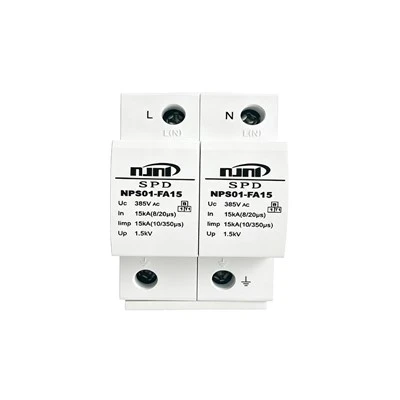
If you have questions about T1 50KA SPDs, pre-installation checks, or maintenance schedules, our team is here to help you every step of the way.
T1+T2 12.5KA Surge Protective Device References
Underwriters Laboratories. (2020). Standard for Surge Protective Devices (UL 1449 4th Edition).
National Electrical Manufacturers Association. (2022). Surge Protection for Commercial and Industrial Applications (NEMA SP 1-2022).
National Fire Protection Association. (2023). National Electrical Code (NEC) Article 250 and Article 285.
IEEE Power & Energy Society. (2021). Surge Protection Design and Installation Guidelines for Electrical Systems (IEEE Std C62.41-2021).
Nanjing Ningpu Lightning Protection Equipment Manufacturing Co., Ltd.
As one of the most professional T1 50ka surge protective device manufacturers and suppliers in China, we’re featured by quality products and good price. Please rest assured to buy customized T1 50ka surge protective device made in China here from our factory. Also, pricelist is available.
Address: Building 1, No.20 Shengyuan Road, Lishui Economic Development Zone, Nanjing City, Jiangsu Province, China
E-mail: 3796023563@qq.com
WebSite: https://www.npspd.com/
