If you’ve ever stood in the parking lot of a suburban shopping center, leaned against a patio rail during a backyard cookout, or even grabbed a handle from an outdoor garden tool, you’ve likely used a plastic plug without even noticing. For years, as a plastic plug supplier, I’ve had customers ask a deceptively simple question: Can these small, unassuming components hold up to outdoor use? The short answer is yes—but only if you pick the right type, pay attention to installation details, and understand the unique stresses that outdoor environments throw at every part. Let me walk you through what I’ve learned over 12 years in this business, straight from the warehouse floor and the job sites we’ve shipped to across North America. Plastic Plug
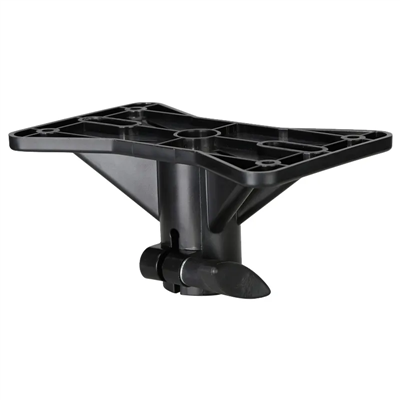
First, let’s get clear on what we’re talking about here. Plastic plugs aren’t just the little white things that hold shelf brackets to a wall indoors. Depending on their design, they can be expansion plugs for anchoring into concrete or drywall, threaded plugs for sealing pipe ends, caps for covering sharp metal edges on patio furniture or outdoor equipment, or even custom-sized plugs for automotive or construction hardware. Outdoors, each of these types faces a different set of challenges. Indoors, the worst they might deal with is a few spills or fluctuating room temperatures. Outside, they have to battle UV radiation, extreme temperature swings, moisture, dirt, and sometimes even pests like rodents or birds that can gnaw through soft materials.
Early in my career, we made a mistake that taught us just how unforgiving outdoor use can be. Back in 2014, a local contractor ordered 500 of our standard injection-molded polyethylene expansion plugs for anchoring deck posts to concrete footings. These plugs worked great for indoor drywall, so we assumed they’d do fine outside. Within six months, he called us furious—half the plugs had cracked and fallen out, leaving deck posts wobbly and his customer threatening to pull payment. When we tested the returned plugs, it was obvious: standard polyethylene doesn’t have UV stabilizers. The sun’s ultraviolet rays break down the polymer chains, making the material brittle over time. Within a year, that same batch would have crumbled to dust. That mistake didn’t just cost us money on returns—it taught us that not all plastics are created equal, especially when they’re going to be exposed to the elements.
Today, we carry three main plastic plug formulations built specifically for outdoor use, each tailored to different environmental conditions, and this is the part I wish every customer knew before they order. The first is UV-stabilized high-density polyethylene (HDPE). This is the workhorse of our outdoor line. We add carbon black or special UV inhibitors during the molding process, which blocks 90% of harmful UV rays from reaching the polymer structure. HDPE is also resistant to mild chemicals, like lawn fertilizer, pool chemicals, or road salt—stuff that seeps into cracks in concrete or drips off patio furniture. It stands up to temperatures from -40°F all the way up to 150°F, which covers almost every climate in the contiguous U.S. and Canada. I’ve seen these plugs still holding strong on a 10-year-old playground structure in Minnesota, where winter temperatures drop below zero and summer highs hit 90°F.
The second type is nylon 6/6 with UV and impact modifiers. Nylon is stiffer and stronger than HDPE, which makes it ideal for applications where the plug needs to bear heavy loads. For example, if you’re anchoring a 10-foot wooden fence post to a concrete footing, or securing metal railings to a balcony, a standard HDPE plug might compress over time under the weight. Nylon plugs won’t do that—they have higher tensile strength and can handle up to twice the load of UV HDPE. We add UV stabilizers to nylon too, but we also add impact modifiers to prevent cracking when temperatures drop. The only caveat with nylon is that it’s more porous than HDPE, so it can absorb moisture over time. That’s not a big deal for most outdoor uses, but if you’re sealing a pipe that holds potable water, you might want to go for the third option.
The third is cross-linked polyethylene (XLPE). XLPE is a newer material, and it’s become our go-to for applications where plugs will be constantly submerged or exposed to constant moisture—like boat dock hardware, irrigation systems, or outdoor plumbing. We can also make food-grade XLPE plugs, which is a big plus for businesses that build outdoor kitchens or garden equipment that comes into contact with produce. XLPE doesn’t absorb moisture at all, it’s resistant to chemicals like chlorine or antifreeze, and it’s flexible enough to withstand freeze-thaw cycles without cracking. Last year, we shipped 1,200 XLPE pipe plugs to a company that installs above-ground pools, and none of them failed during the first winter when the pool was drained and the pipes were left outside.
But even the best plastic plug will fail outdoors if you don’t install it right. I’ve seen customers cut corners here all the time. One common mistake is choosing the wrong size plug. If you use a plug that’s too small for the hole you’re drilling, it won’t expand enough to grip the concrete or metal, so it will pull out under load. If it’s too big, you’ll have to force it into the hole, which can crack the plastic, especially in cold weather. We always tell customers to measure their hole diameter with a caliper, not just a ruler, because drilling in concrete can sometimes leave holes slightly wider or narrower than advertised. We also give them a guide for how deep to drill the hole—usually 1/4 inch deeper than the plug’s length—so there’s extra space for dust and debris, which can prevent the plug from seating properly.
Another mistake is not preparing the hole before inserting the plug. When you drill into concrete, you get a bunch of fine dust, and if that dust stays in the hole, the plug can’t expand fully. We always tell customers to blow out the hole with compressed air, or even use a stiff brush to scrub the sides, before pushing the plug in. If you’re working in a damp area, like a dock or a patio that gets frequent rain, you also want to make sure the hole is completely dry before inserting the plug. Moisture can get trapped between the plug and the hole, leading to mold growth or even freeze-thaw damage that breaks the plug from the inside out.
Let’s talk about some real-world applications to make this concrete. Last year, we worked with a company that builds outdoor playground equipment for public parks. They were using our UV-stabilized HDPE cap plugs to cover the sharp ends of metal pipe that make up the frame of swings and slide supports. Before they started using our outdoor plugs, they were buying generic caps from a big box store, and within two years, half of them had turned yellow, cracked, and fallen off. Kids were getting small cuts from the exposed metal edges, and the city was threatening to cancel their contracts. We sent them a sample of our UV HDPE caps, and they tested them for 18 months at a park in Arizona, where temperatures regularly hit 110°F and UV exposure is extreme. At the end of the test, the caps looked almost new. They ordered 10,000 more, and haven’t had a single complaint since.
Another customer is a manufacturer of outdoor storage sheds. They use our expansion plugs to anchor their shed’s metal base frames to concrete pads. Earlier this year, they had a batch of sheds installed in Colorado, where winter temperatures drop to -20°F and wind chills make it feel even colder. They were worried the plugs would crack in the cold, so they tested our nylon outdoor plugs, which have impact modifiers for low temperatures. When they checked the sheds after the first big winter storm, none of the plugs had cracked, and the sheds hadn’t shifted at all, even when the wind hit 50 mph.
Of course, plastic plugs aren’t perfect for every outdoor job. If you’re working with extremely high temperatures, like around a grill or a fire pit, you’ll need a heat-resistant plastic, like a specialty polyimide, which can handle temperatures up to 500°F. That’s a more expensive material, but it’s necessary for those specific applications. And if you’re looking for a plug that will hold up to constant heavy impact, like on a commercial playground that gets a lot of rough play, you might want to consider a metal or stainless steel plug instead, though our UV HDPE and nylon plugs work well for most residential and light commercial applications.
As a supplier, we also offer custom sizing and machining for outdoor plugs, because no two jobs are exactly the same. Sometimes a customer needs a plug that fits a non-standard hole size, or has a specific shape to fit a patio umbrella base or a garden tool handle. We can mold plugs in any size from 1/8 of an inch to 6 inches, with custom threads, flanges, or seals to meet exact specifications. We also offer bulk ordering for contractors and large-scale projects, with fast shipping across the U.S. and Canada.
At the end of the day, the answer to “Can plastic plugs be used outdoors?” is a resounding yes—if you pick the right material for your environment, install it correctly, and work with a supplier who knows the difference between an indoor plug and an outdoor one. That’s the service we offer at our company: not just selling parts, but helping customers figure out which plug will work best for their specific job, whether it’s anchoring a deck, sealing a pipe, or covering a sharp edge on playground equipment. We test every batch of our outdoor plugs for UV resistance, temperature stability, and load capacity, so you don’t have to worry about them failing when you need them most.

If you’re working on an outdoor project—whether it’s a small DIY backyard upgrade or a large commercial construction job—and you’re not sure which plastic plug is right for you, we’d love to help. We can send free samples for testing, answer any questions you have about material specs or installation, and provide bulk pricing for large orders. Don’t let a cheap, generic plug ruin your outdoor project or lead to costly repairs down the line. Reach out to our team today to start your next order, and let’s make sure your project is built to last, even in the harshest outdoor conditions.
Plastic Plug References
ASTM D4329, Standard Practice for Fluorescent Ultraviolet (UV) Lamp Apparatus for Exposure of Plastics
Plastics Industry Association, Outdoor Durability of Polymers and Composites, 2021
National Association of Home Builders, “Anchoring Deck Posts to Concrete: Best Practices,” 2019
International Code Council, Chapter 19: Concrete and Masonry, 2021 International Residential Code
American Water Works Association, Plastic Plug and Pipe Sealing Materials for Outdoor Applications, 2020
Deqing Fengcheng Plastic Products Co., Ltd.
With abundant experience, we are one of the most professional plastic plug manufacturers and suppliers in China. We warmly welcome you to wholesale bulk customized plastic plug from our factory. If you have any enquiry about free sample, please feel free to email us.
Address: No. 18, Yanhe West Road, Yuyue Town, Deqing County, Huzhou City, Zhejiang Province
E-mail: super_fetching@163.com
WebSite: https://www.funchim.com/
