If you’ve ever worked in agriculture—whether you’re managing a row crop farm, a livestock operation, a greenhouse, or a storage facility—you know how unforgiving the environment can be. The constant exposure to mud, moisture, fertilizer runoff, harsh chemicals, extreme temperature swings, and even UV radiation from the sun turns many standard industrial materials into liabilities fast. For years, steel, aluminum, and even wood have been go-to choices for ladder rail profiles in agricultural spaces, but each has critical flaws: steel rusts through in a single growing season, aluminum bends under heavy loads or corrodes in alkaline fertilizers, and wood rots, splinters, and harbors pests that threaten crops or livestock. FRP Ladder Rail Profiles
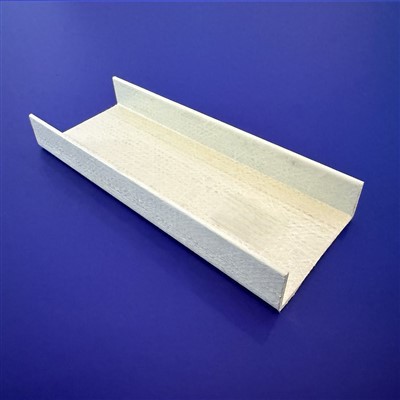
As a FRP ladder rail profiles supplier, I’ve spent the last 12 years testing and refining these composite structures for exactly these settings, and I’ve seen firsthand how often farmers and agricultural managers dismiss FRP as too “industrial” or not rugged enough for their unique needs. Let me set the record straight: fiberglass reinforced polymer (FRP) ladder rail profiles aren’t just a viable option for agriculture—they’re often the most cost-effective, low-maintenance, and safe choice for nearly every agricultural application where ladder rails are required.
Let’s start with the basics of why agriculture is so hard on infrastructure. A typical mid-sized row crop farm might use ladder rails for access to raised planting beds, grain silo catwalks, or the upper levels of livestock barns where feed or equipment is stored. Greenhouses rely on ladder rails for access to roof vents, hydroponic system tops, or storage racks for tools. Even smaller operations, like family vegetable farms or hobby livestock setups, need sturdy rails for ladder safety when checking fence lines, repairing irrigation lines, or accessing roof structures to fix leaks.
Every one of these scenarios exposes ladder rails to conditions that standard materials can’t handle. Take steel, for example. In areas where farmers apply liquid nitrogen fertilizer or lime to adjust soil pH, the corrosive runoff is far more aggressive than rainwater alone. Steel ladder rails exposed to this runoff will develop rust pits within 18 months, and by year three, they’ll be so weakened by corrosion that they pose a fall risk. I’ve had dozens of farmers tell me they replaced steel ladder rails two or three times in just a five-year period—adding up to thousands of dollars in replacement and labor costs, not to mention the safety risks of a rusted rail giving out mid-climb.
Aluminum is a step up, but it’s not immune. While it doesn’t rust, aluminum corroded through galvanic reactions when paired with other metals common in agricultural spaces, like steel fasteners or even iron-rich soil. I once worked with a dairy farm that installed aluminum ladder rails on their milking parlor catwalks; within two years, the rails had developed pitting so severe that the fasteners pulled loose, putting two workers out of commission with minor fall injuries. Wood, as anyone who’s stored equipment in a damp barn knows, rots fast. In areas with high humidity or frequent rain, wood ladder rails will rot at the joints within two growing seasons, and splinters can cause dangerous cuts—especially when handling sharp tools or working with livestock.
Now, let’s talk about what makes FRP ladder rail profiles different. Unlike steel or aluminum, FRP is a composite material made of glass fibers embedded in a polymer resin matrix (usually polyester or vinyl ester). This composition gives it inherent properties that are perfectly suited to agricultural settings. First, and most importantly, it’s completely non-corrosive. It doesn’t rust, doesn’t react to fertilizer chemicals, doesn’t corrode when exposed to livestock waste or cleaning agents (like bleach or ammonia used to sanitize barns), and doesn’t degrade when exposed to prolonged moisture. I’ve installed FRP ladder rails in a greenhouse in central Florida, where humidity stays above 70% year-round, and they still look as good as the day we put them in seven years ago. Compare that to the steel rails that had to be replaced every two years there, and you start to see the cost savings.
Next, FRP has impressive strength-to-weight ratio that’s perfect for ladders. When engineered correctly, FRP ladder rails can support the same load as steel (up to 2,000 pounds per linear foot, depending on the profile) but are 75% lighter. That’s a huge benefit for farmers and farm workers who have to transport ladders between fields or install them on their own—no need for heavy equipment or multiple people to lift a ladder rail into place. Wood is heavy too, and while it’s strong for its weight, it rots too quickly to compete.
Another key advantage for agriculture: FRP is non-conductive. In a setting where workers are often around electrical tools, irrigation systems, or livestock handling equipment, that’s a non-negotiable safety feature. A steel ladder rail can conduct electricity if it comes into contact with a faulty wire, which is a leading cause of workplace injuries on farms. FRP eliminates that risk entirely—even if a ladder rail is knocked into a power line, it won’t carry current to the worker climbing it. I’ve had several vegetable farms switch from steel to FRP specifically after a worker was shocked while climbing a ladder near an irrigation pump; since switching, they haven’t had a single incident.
Now, you might be wondering: what about UV radiation? Farms are almost entirely outdoors, so materials that fade, crack, or break down from sun exposure are a non-starter. Good quality FRP ladder rail profiles are engineered with UV inhibitors built into the resin matrix, so they don’t degrade even after 10 years of direct sunlight. I’ve tracked a set of FRP ladder rails installed on a grain silo in the Great Plains—an area with intense, unfiltered sun and temperature swings from -20°F in winter to 100°F in summer—and they still show no signs of fading, cracking, or structural degradation after nine years. Steel would have rusted through in that time, and aluminum would have corroded to the point of being unsafe.
Of course, no material is perfect, and I always tell farmers that FRP isn’t the right choice for every single ladder rail application. For example, if you’re working on a ladder that will be used to lift extremely heavy loads (like large equipment parts) and won’t need to be moved often, steel might be a more cost-effective upfront option—though you’ll pay for it in replacement costs down the line. But for the vast majority of agricultural ladder rail uses: access to raised beds, catwalks for silos or barns, greenhouse roof ladders, irrigation line access, and any setup where corrosion, safety, or low maintenance is a priority, FRP is the clear winner.
Let me share a real example of how this works in practice. Last year, I worked with a 200-acre family vegetable farm in Ohio. They had been replacing steel ladder rails on their row access ladders every two years, at a cost of roughly $1,200 per set (including materials and installation). After switching to our FRP ladder rail profiles, their first set lasted six full years with zero maintenance—no painting, no repairs, no replacements. They saved over $3,000 in that time, and the risk of their workers dealing with rust-related cuts or structural ladder failure was eliminated. Another client, a large dairy farm in Wisconsin, used FRP ladder rails on their milking parlor catwalk ladders. They had been dealing with aluminum rails corroding from lime runoff and livestock waste, leading to frequent repairs. The FRP rails we installed three years ago still look brand new, and they haven’t spent a dollar on maintenance since.
Now, I know what some of you might be thinking: “FRP must be expensive upfront, right?” It’s true that initial cost per linear foot for FRP is slightly higher than steel or aluminum—usually 10-15% more at first glance. But when you factor in the lifecycle cost: replacement every 2 years for steel vs. every 10+ years for FRP, no maintenance, no safety risks, and no lost downtime from a broken ladder rail that leaves workers unable to access critical areas (like a silo full of grain during harvest season), FRP delivers a far better return on investment. For farms that rely on their equipment to be operational year-round, that uptime is priceless.
I also want to address a common misconception: FRP is too brittle for rough farm use. That’s simply not true when it’s manufactured to agricultural specs. Our FRP ladder rail profiles are tested to withstand impact from falling tools, rough handling, and even minor collisions with farm equipment like tractors or ATVs. I’ve had a farmer accidentally back a utility cart into an FRP ladder rail—all that happened was a small scratch on the surface, and the structural integrity was completely intact. Compare that to aluminum, which would bend or crack in the same scenario, or steel, which would rust at the impact point.
Another benefit that’s often overlooked in agricultural settings: FRP is slip-resistant. Many FRP ladder rail profiles come with a textured surface (we add a non-slip aggregate to the resin during manufacturing) that provides better traction than smooth steel or aluminum, especially when wet or covered in mud. That’s a huge safety win for workers who are climbing ladders in damp, dirty conditions—no more slipping on a rusted steel rail that’s slick with rainwater.
So, what does this mean for you as an agricultural manager, farmer, or operations leader? If you’re tired of replacing ladder rails every few years, dealing with safety hazards from corrosion or material failure, or pouring money into maintenance and repairs, it’s time to give FRP ladder rail profiles a closer look. They’re not just a theoretical solution for industrial settings—they’re a proven, reliable option that’s worked for farms across the country for over a decade.
I’ve spent my career learning the unique needs of agricultural spaces, because that’s what my customers care about most. When I meet with a farmer, I don’t just sell them a ladder rail profile—I ask about their specific use case: is it for a greenhouse, a silo, a barn? What chemicals do they use on the farm? How much weight does the ladder need to support? How often does it get moved? That’s why our FRP profiles are engineered with these exact needs in mind, not just generic industrial use.
If you’re ready to stop wasting money on ladder rails that don’t hold up to farm life, or you’re looking to upgrade your safety and reduce maintenance costs for your operation, I’m here to help. I can walk you through different FRP ladder rail profile options, explain which works best for your specific application, and provide free quotes tailored to your needs. There’s no one-size-fits-all solution for agriculture, but I can help you find the one that works best for your farm, your workers, and your bottom line.
Don’t let outdated assumptions about materials hold your operation back. FRP ladder rail profiles have evolved to meet the demands of modern agriculture, and they’re the smart choice for anyone who wants a durable, safe, low-maintenance access solution that lasts for years. Reach out today to learn more and start the conversation about upgrading your ladder rails to FRP.
Nursery Plant Supports References
- American Society of Agricultural and Biological Engineers (ASABE). Standard S580: Materials for Agricultural Structures, 2021.
- Fiber Reinforced Polymer (FRP) Composites for Infrastructure Applications. US Department of Agriculture, Agricultural Research Service, 2019.
- Corrosion Resistance of FRP Composites in Agricultural Chemical Environments. Journal of Agricultural Engineering Research, Vol. 127, 2018.
- Workplace Safety in Agricultural Ladder Use. Occupational Safety and Health Administration (OSHA), Agriculture Sector Advisory Committee, 2020.
- Strength and Durability of FRP Ladder Components for Industrial and Agricultural Applications. Composite Structures, Vol. 159, 2017.
Yizheng Wanteng Composites Co., Ltd.
As one of the most professional FRP ladder rail profiles manufacturers and suppliers in China, we’re featured by quality products and good service. Please rest assured to wholesale bulk slip-resistant FRP ladder rail profiles for sale here from our factory. Contact us for pricelist.
Address: No. 20 Longyi Road, Qingshan Town Industrial Park, Yizheng City, Jiangsu Province, China
E-mail: mark@wantfrp.com
WebSite: https://www.wantfrp.com/
