If you’ve ever run your fingers over a scarf that feels thick, luxe, and has a pattern that looks woven right into the fabric (not just printed on top), chances are you’ve held a Jacquard scarf. As someone who’s been in the business of crafting and supplying these scarves for over a decade, I’ve lost count of how many times customers ask me, “What’s the big deal with Jacquard? Why not just get a printed scarf that’s cheaper?” The answer isn’t just about looks—though that’s a big part of it. It’s about durability, quality, versatility, and even the small, intentional touches that make a scarf feel like more than just an accessory. Let me break down the advantages of Jacquard scarves, from what makes them different from other scarves to why they’re worth investing in for your personal collection or business. Jacquard Scarf

First, let’s get one key point straight: Jacquard isn’t a fabric—it’s a weaving technique, and that difference changes everything. Most scarves you see in department stores are printed: a design is applied to a finished fabric with ink, which sits on the surface. Jacquard works the opposite way. Using a special loom (originally invented by Joseph Marie Jacquard in the early 1800s, with punch cards that later laid the groundwork for early computers), the loom controls individual warp and weft threads to weave patterns directly into the fabric as it’s made. No ink, no layering, no risk of the design cracking or fading after a few washes. That core difference is where all the advantages start.
The most obvious advantage is unmatched design precision and depth. A printed scarf’s pattern is flat—you can run your hand over it and feel the fabric’s smooth surface, with just ink on top. A Jacquard pattern has texture, too. A floral design might have rose petals woven with finer, softer threads, while the stems use slightly thicker, tighter yarns to create subtle contrast. We’ve done custom designs for a few small boutique brands, and one of my favorites was a line of scarves with minimalist geometric shapes for a home goods store. When they saw the first sample, they couldn’t believe how the lines looked sharp and crisp from far away, but up close, you could feel the tiny variation in thread that made each shape pop. Printed versions of that same design would have looked blurry or washed out after two washes, but the Jacquard version kept its definition because the threads were interlocked with the base fabric, not just stuck on.
Durability is another huge win, especially for people who use their scarves regularly or for business. I’ve had customers come back to me after 5 years, saying their Jacquard scarf is still their go-to, while they’ve gone through 3 or 4 printed scarves in that same time. The weaving technique means the design doesn’t peel, crack, or fade because it’s part of the fabric itself. The yarns are also woven more tightly in areas with pattern details, so there’s less pilling—those tiny fuzzy balls that make scarves look old fast. We use a mix of high-quality wool, cotton, and even recycled cashmere for our scarves, but even with a mid-weight cotton blend, the Jacquard weave holds up better than any printed fabric. I remember a customer who bought a Jacquard scarf for a work trip to a cold, dry climate—she brought it back a year later, and the only thing that changed was that it was a little softer from wear, not that the pattern had faded or frayed. That kind of longevity means a Jacquard scarf isn’t a disposable accessory; it’s a piece you can pass down or use for years, which makes it a better value over time.
Versatility is a big one too, especially if you’re someone who likes to use accessories for multiple occasions. Jacquard scarves work for formal events, workdays, casual weekends, and even travel. Because the weave is dense, it adds warmth without being bulky—perfect for layering under a blazer in a cool office or throwing over a coat on a crisp fall day. The pattern also works for almost any aesthetic: we make scarves with subtle, understated motifs for professional settings, bold, vibrant designs for festivals or casual outings, and even neutral, textured patterns that go with everything in a wardrobe. A lot of our retail clients tell us their best-selling Jacquard scarves are the ones with small, intricate patterns that don’t look too loud for the office, but still feel special enough for a dinner out. Printed scarves often feel more limited in their use—something too bold for work might be too boring for a night out, but Jacquard’s depth makes patterns that work across different contexts.
Wait, let’s talk about texture too—something that’s impossible to get with printing. Jacquard scarves have a tactile quality that makes them feel luxurious, even if they’re made with more accessible fibers. The variation in thread thickness and weave creates small bumps, ridges, and soft shifts in the fabric that you can see and feel. I’ve had customers tell me they buy our scarves just because they’re so nice to wrap around their neck—better than any smooth printed scarf they’ve owned. That texture also adds warmth: the small gaps and variations in the weave trap air, so a Jacquard scarf can be warmer than a same-weight printed scarf, without adding extra bulk. For people who live in colder climates or like to have a scarf that works for outdoor activities, that’s a huge practical benefit.
Another thing that often gets overlooked is that Jacquard scarves are often more sustainable, when made with the right materials. Because the design is woven directly into the fabric, there’s no excess ink or water used for printing—something that’s a big plus for eco-conscious customers. We use a lot of organic cotton and recycled wool for our scarves, and the tight weave means the fabric lasts longer, so it doesn’t end up in a landfill as fast as a disposable printed scarf. I work with a few small fair-trade cooperatives to source our yarns, and we make sure every step of the weaving process is as low-waste as possible. Even the loom scraps get repurposed into small pouches or keychains, so almost nothing goes to waste. That sustainability angle is a big selling point for both retail customers and boutique brands that want to offer their clients ethically made accessories.
I’ve also noticed that Jacquard scarves tend to have a more timeless feel than printed ones. Printed designs often feel dated quickly—think the loud patterns that were popular 10 years ago, which now look out of style. Jacquard patterns are woven to be intricate but understated, so they don’t follow fast fashion trends the same way. A classic floral or geometric Jacquard scarf from the 1950s is still wearable today, whereas a printed scarf from that same era might have a pattern that feels very much of its time. We’ve had a few clients ask for custom Jacquard scarves with vintage-inspired patterns, and those are some of our most popular orders because they feel classic, not trendy. That timelessness means you’re not buying a scarf that will go out of style in a year—you’re buying something that can be part of your wardrobe for decades.
Of course, no product is perfect, and I’ll be honest: Jacquard scarves do cost a little more upfront than printed ones. But when you compare the cost over time, it’s a much better investment. A printed scarf might cost $20, and you’ll replace it every year. A Jacquard scarf might cost $80, and it will last 5 years or more. That works out to $16 a year, vs. $20 a year for printed. Plus, the quality and feel are worth the extra cost for people who value good accessories. We make sure our prices are fair—we work directly with our weavers to keep costs reasonable, so we’re not marking up for unnecessary overhead. A lot of our wholesale clients tell us their customers are willing to pay more for a Jacquard scarf because they can feel the difference the second they touch it.
As a supplier, what I love most about Jacquard scarves is that they work for every kind of customer. Whether you’re a retail boutique looking for products that stand out from fast fashion, a corporate brand wanting custom scarves for employee gifts, or an individual looking for a scarf that will last, there’s a Jacquard scarf that fits. We do custom designs, too—if a client has a specific pattern in mind, we can work with them to translate that design into a Jacquard weave, making sure every detail comes through. I’ve had clients bring in a sketch, a photo of a painting, or even a logo, and we can weave that into a scarf that looks exactly like they imagined, with the depth and quality that only Jacquard can give.
If you’re a retailer looking to update your accessory line, or someone who wants to invest in a scarf that will last for years, Jacquard is the way to go. It’s not just a fashion trend—it’s a timeless, durable, and versatile accessory that works for every part of life. The next time you’re shopping for a scarf, run your fingers over it. If you can feel the pattern in the fabric, that’s Jacquard, and that’s the quality that makes all the difference.
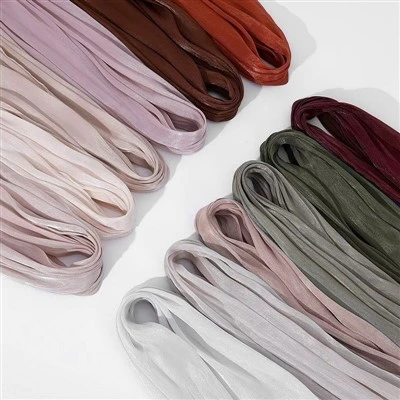
If you’re interested in learning more about our Jacquard scarf options, custom design services, or wholesale pricing, feel free to reach out to our team to set up a conversation about your needs.
Silk Scarf References
- Collier, B. (2012). Textile Technology: Weaving, Knitting, and Other Fabric Formation Processes. Woodhead Publishing.
- Wilson, K. (2019). Sustainable Fashion: A Practical Guide to Materials and Production. Routledge.
- Jackson, H. (2021). The History of Textile Weaving: From Ancient Looms to Modern Techniques. Thames & Hudson.
- Fair Trade USA. (2020). Fair Trade in Textiles: Benefits for Artisans and Communities. Fair Trade International.
Deqing Boliya Silk Co., Ltd.
Deqing Boliya Silk Co., Ltd. is one of the most professional jacquard scarf manufacturers and suppliers in China, featured by quality products and good service. Please rest assured to wholesale the newest jacquard scarf in stock here and get quotation from our factory. We also accept customized orders.
Address: Baibiao Industrial Zone, Xinshi Town, Deqing County, Zhejiang Province, China
E-mail: boliya@boliyasilk.com
WebSite: https://www.boliyasilk.com/
