What is the power consumption of indoor LED displays?
As a seasoned supplier of indoor LED displays, I’ve encountered countless inquiries regarding power consumption. It’s a crucial aspect that customers, from small – scale retailers to large – scale corporate event planners, are deeply concerned about. In this blog, I’ll dive deep into the factors influencing the power consumption of indoor LED displays, how it can be measured, and ways to optimize it. Indoor LED Display
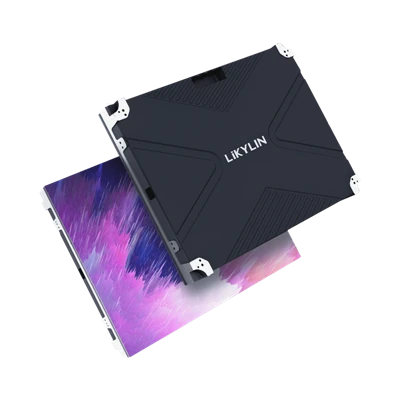
Factors Affecting the Power Consumption of Indoor LED Displays
The power consumption of an indoor LED display is far from a one – size – fits – all metric. It is shaped by multiple elements, each playing a significant role.
Display Size: This is perhaps the most obvious factor. Larger displays generally consume more power. Just like a bigger house needs more electricity to light up, a larger LED display has more LEDs to illuminate. For instance, a 50 – square – foot indoor LED display will use substantially more power than a 10 – square – foot one. The relationship between size and power consumption is not always linear, but it’s a strong positive correlation. As the area of the display increases, the number of individual LED components also goes up, leading to higher energy usage.
Pixel Pitch: Pixel pitch refers to the distance between the centers of two adjacent pixels on the display. A finer pixel pitch means more pixels are packed into a given area. Displays with a smaller pixel pitch, such as P1.2 or P1.5, have a higher pixel density and thus more LEDs in a square meter. This results in increased power consumption compared to displays with a coarser pixel pitch like P3 or P4. However, the finer pixel pitch is often chosen for applications where high – resolution visuals are required, such as in control rooms or high – end retail showcases.
Brightness Setting: The brightness of an indoor LED display can be adjusted according to the ambient light conditions of the installation environment. Higher brightness levels demand more power. For example, if a display is set to maximum brightness to stand out in a well – lit convention center, it will consume significantly more energy than when it’s dimmed for use in a subdued office lobby. In fact, power consumption can vary by up to 50% just based on different brightness settings.
Content Played: The type of content being displayed also impacts power consumption. A display showing bright, highly saturated colors and fast – moving animations will use more power than one showing static, predominantly black or dark – colored content. This is because LEDs need more energy to produce bright and vivid colors. An ad campaign with colorful product images and dynamic effects will cause the display to draw more electricity than a simple text – only schedule.
Measuring the Power Consumption of Indoor LED Displays
Accurately measuring the power consumption of an indoor LED display is essential for budgeting and understanding energy costs.
Power Supply Rating: The power supply unit of an LED display is a good starting point for estimating power consumption. The power supply is rated in watts (W), and it gives an indication of the maximum power the display can draw. However, this is the peak power, and the actual consumption may be much lower depending on the factors mentioned above.
Power Meters: Using a power meter is a more accurate way to measure real – time power consumption. These devices can be connected between the power source and the display. They provide detailed information about the amount of electricity being used at any given moment, allowing users to monitor how different content, brightness levels, and other settings affect power draw.
Calculation Based on LED Specifications: If you know the specifications of the individual LEDs used in the display, you can also calculate an approximate power consumption. Each LED has a rated forward current and voltage, and by multiplying these values and then summing up the power of all the LEDs in the display, you can get an estimate. However, this method doesn’t account for the power used by other components in the display, such as the control system and power supply losses.
Optimizing the Power Consumption of Indoor LED Displays
As an indoor LED display supplier, I’m always looking for ways to help my customers reduce their energy costs without sacrificing display quality.
Intelligent Brightness Control: Implementing an intelligent brightness control system can significantly cut down power consumption. These systems use ambient light sensors to adjust the display brightness according to the surrounding light conditions. For example, in a retail store, the display can be set to dim during the evening when the store’s interior lighting is lower, and then brighten up during the day when there is more natural light. This not only saves energy but also provides a more comfortable viewing experience for the audience.
Content Management: Careful selection and management of the content can also lead to power savings. Designing content with darker backgrounds and less use of extremely bright colors can reduce the power required to display it. Additionally, scheduling the display of high – power – consuming content for shorter periods can help balance visual impact and energy efficiency.
Upgrading to Energy – Efficient LEDs: The LED technology is constantly evolving, and newer models are often more energy – efficient. By upgrading the LEDs in an existing display or choosing displays with the latest LED technology, customers can enjoy lower power consumption. For example, some new LEDs use advanced semiconductor materials that require less power to produce the same level of brightness.
The Economic and Environmental Benefits of Low – Power Indoor LED Displays
Reducing the power consumption of indoor LED displays has both economic and environmental advantages.
Economic Benefits: Lower power consumption means lower electricity bills. For businesses, especially those that operate their displays for long hours, the savings can be substantial over time. Additionally, energy – efficient displays may also qualify for certain government incentives or rebates, further reducing the overall cost of ownership.
Environmental Benefits: In an era where sustainability is a top priority, using low – power indoor LED displays helps to reduce the carbon footprint. By consuming less electricity, these displays contribute to a decrease in greenhouse gas emissions associated with power generation. This is not only good for the planet but also enhances a company’s corporate social responsibility image.
Conclusion

In conclusion, the power consumption of indoor LED displays is influenced by multiple factors, including display size, pixel pitch, brightness setting, and content played. By understanding these factors, accurately measuring power consumption, and implementing optimization strategies, customers can significantly reduce their energy costs while maintaining high – quality visual experiences.
Indoor LED Display If you’re in the market for an indoor LED display and want to learn more about how to balance performance and power efficiency, I’d love to have a chat with you. Whether you have a small – scale project or a large – scale installation in mind, our team of experts is ready to provide you with the most suitable solutions. Reach out to us for a detailed consultation on your indoor LED display needs, and let’s work together to create an energy – efficient and visually stunning display for your space.
References
- "LED Display Technology: Principles and Applications" – A comprehensive book on the technical aspects of LED displays, including power consumption.
- Industry reports from leading market research firms on the latest trends in indoor LED display technology and energy efficiency.
LiKYLIN (Chongqing) Intelligent Technology Co., Ltd.
As one of the most professional indoor led display manufacturers and suppliers in China, we’re featured by quality products and low price. Please rest assured to wholesale advanced indoor led display in stock here and get free sample from our factory. We also accept customized orders.
Address: Building 1, No.57, Jinfu Blvd, Gu’nan Street, Qijiang District, Chongqing, China
E-mail: marketing@likylin-led.com
WebSite: https://www.cqlikylinled.com/
