The history of auto seatbelt development is a fascinating journey that spans over a century, marked by innovation, safety concerns, and regulatory changes. As an auto seatbelt supplier, I’ve witnessed firsthand the evolution of this crucial safety feature and the impact it has had on road safety. In this blog post, I’ll take you through the key milestones in the history of auto seatbelt development and discuss how our company has adapted to these changes to provide the best possible products for our customers. Auto Seatbelt
Early Beginnings: The Concept of Safety Restraints
The concept of using restraints to protect passengers in vehicles dates back to the late 19th century. In 1885, George Cayley, an English engineer, designed a seatbelt for his glider to prevent the pilot from being thrown out during flight. This early invention laid the foundation for the development of seatbelts in automobiles.
In the early days of the automotive industry, seatbelts were not a standard feature. Cars were relatively slow, and the focus was more on performance and style than on safety. However, as cars became faster and more powerful, the need for safety restraints became increasingly apparent.
The First Auto Seatbelts: 1930s – 1950s
The first commercial auto seatbelts were introduced in the 1930s. These early seatbelts were simple lap belts that were designed to keep passengers in their seats in the event of a sudden stop or collision. The first car to offer seatbelts as an optional extra was the Nash Ambassador in 1949. However, at the time, seatbelts were not widely adopted, as many people saw them as uncomfortable and unnecessary.
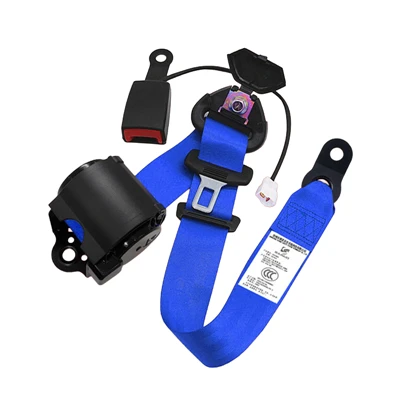
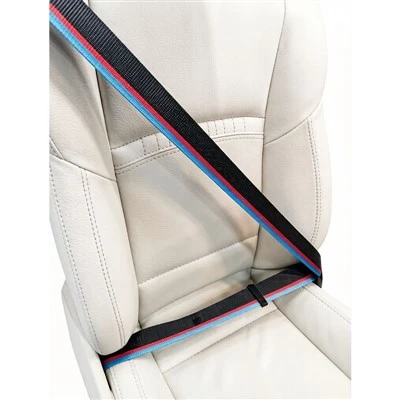
In the 1950s, the automotive industry began to take safety more seriously. In 1955, Swedish engineer Nils Bohlin, working for Volvo, invented the three – point seatbelt. This revolutionary design combined a lap belt and a shoulder belt, providing much better protection for passengers in the event of a crash. The three – point seatbelt was first introduced in the Volvo PV544 in 1959. Volvo made the patent for the three – point seatbelt available to other car manufacturers for free, recognizing the importance of this safety innovation for the entire automotive industry.
The Push for Seatbelt Mandates: 1960s – 1980s
The 1960s and 1970s were a period of significant change in the automotive safety landscape. In 1966, the United States Congress passed the National Traffic and Motor Vehicle Safety Act, which established the National Highway Traffic Safety Administration (NHTSA). The NHTSA was tasked with setting safety standards for motor vehicles, including the requirement for seatbelts.
In 1968, the NHTSA mandated that all new cars sold in the United States be equipped with front – seat seatbelts. However, it wasn’t until the 1970s that seatbelt usage began to increase significantly. In 1973, the state of New York became the first state in the United States to introduce a seatbelt law, requiring drivers and front – seat passengers to wear seatbelts.
Throughout the 1970s and 1980s, other countries around the world followed suit, introducing seatbelt laws and regulations. These laws, combined with public education campaigns, helped to increase seatbelt usage rates and improve road safety.
Technological Advancements: 1990s – Present
Since the 1990s, there have been many technological advancements in auto seatbelt design. One of the most significant developments has been the introduction of pretensioners. Pretensioners are devices that tighten the seatbelt in the event of a crash, reducing the slack and keeping the passenger firmly in their seat. This helps to minimize the forward movement of the passenger and reduce the risk of injury.
Another important advancement is the use of load limiters. Load limiters work in conjunction with pretensioners to control the amount of force applied to the passenger by the seatbelt. In a severe crash, the load limiter allows the seatbelt to stretch slightly, reducing the peak force on the passenger’s body and reducing the risk of injury.
In recent years, there has also been a growing trend towards the development of intelligent seatbelt systems. These systems use sensors and advanced electronics to detect the severity of a crash and adjust the seatbelt’s tension and force accordingly. For example, in a minor crash, the seatbelt may apply a lower level of force, while in a more severe crash, it will apply a higher level of force to protect the passenger.
Our Role as an Auto Seatbelt Supplier
As an auto seatbelt supplier, we have been at the forefront of these technological advancements. We invest heavily in research and development to ensure that our seatbelts meet the highest safety standards and incorporate the latest technologies. Our team of engineers and designers work closely with car manufacturers to develop seatbelt systems that are tailored to the specific needs of their vehicles.
We also understand the importance of quality control. Every seatbelt that we produce undergoes rigorous testing to ensure that it meets or exceeds all relevant safety standards. We use state – of – the – art manufacturing processes and materials to ensure the durability and reliability of our products.
In addition to providing high – quality seatbelts, we also offer excellent customer service. We work closely with our customers to understand their requirements and provide them with the best possible solutions. Whether it’s a large – scale production order or a custom – designed seatbelt for a special vehicle, we are committed to meeting our customers’ needs.
The Future of Auto Seatbelt Development
Looking to the future, the development of auto seatbelts is likely to be driven by several key trends. One of the most significant trends is the increasing adoption of autonomous vehicles. As cars become more autonomous, the role of the seatbelt may change. For example, in fully autonomous vehicles, passengers may be able to recline their seats and relax during the journey. This will require the development of new seatbelt designs that can provide adequate protection in different seating positions.
Another trend is the growing focus on sustainability. As the automotive industry moves towards more sustainable practices, there will be a greater demand for seatbelts made from eco – friendly materials. We are already exploring the use of recycled and bio – based materials in our seatbelt production to reduce our environmental impact.
Finally, as technology continues to advance, we can expect to see even more intelligent and sophisticated seatbelt systems. These systems may be integrated with other safety features in the vehicle, such as airbags and collision avoidance systems, to provide a comprehensive safety solution for passengers.
Conclusion
The history of auto seatbelt development is a story of innovation, safety, and progress. From the early days of simple lap belts to the high – tech intelligent seatbelt systems of today, seatbelts have come a long way in improving road safety. As an auto seatbelt supplier, we are proud to be a part of this history and are committed to continuing to develop and provide the best possible seatbelt products for our customers.
GM Seatbelts If you’re in the market for high – quality auto seatbelts, we’d love to discuss your needs with you. Our team of experts can provide you with detailed information about our products and services and help you find the right seatbelt solution for your vehicles. Contact us today to start a conversation about your seatbelt procurement needs.
References
- "Seat Belt History". National Highway Traffic Safety Administration.
- "The History and Future of Seat Belt Technology". Automotive Engineering International.
- "Volvo’s Three – Point Seat Belt: A Lifesaver for 50 Years". Volvo Cars.
Yangzhong Weian Mechanical and Electrical Co., Ltd.
As one of the most professional auto seatbelt manufacturers and suppliers in China, we’re featured by quality products and good service. Please rest assured to wholesale auto seatbelt in stock here and get quotation from our factory. Customized orders are welcome.
Address: Group 10, Xinhua Village, Xilaiqiao Town, Yangzhong City; West of The Bus Terminal On Yuanqu Avenue.
E-mail: hfsaml_2008@qq.com
WebSite: https://www.weianseatbelt.com/
