If you’ve ever stood on the open deck of a cross-Channel ferry, watching seabirds glide above the waves while the low hum of engines fills the air, you might not have stopped to think about what that hum is carrying. Ferries, unlike smaller vessels or even shore-side buildings, operate 24/7, often traversing busy coastal routes where emissions regulations are tightening faster than ever before. For years, my company has specialized in designing and installing carbon dioxide removers specifically for marine applications—and today, I want to pull back the curtain on how these systems work, and why they’re no longer a luxury for ferries, but a necessity. Carbon Dioxide Remover
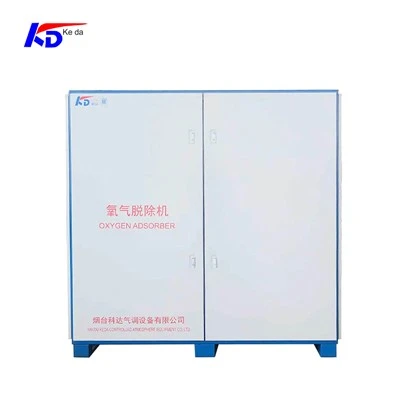
First, let’s ground this in the problem: a typical large passenger ferry, carrying 1,000 people and hundreds of vehicles on a 2-hour crossing from Dover to Calais, generates roughly 25 tons of CO2 per trip. That’s not a small number, and multiply that by 10 crossings a day, and you’re looking at 75,000 tons of CO2 a year from a single vessel. Old-school mitigation methods, like switching to low-sulfur fuel, help with other pollutants, but CO2 is a persistent greenhouse gas that doesn’t just disappear. It lingers in the atmosphere, contributing to ocean acidification and the acceleration of climate change. For ferry operators, the pressure is coming from two sides: international regulations like the International Maritime Organization’s (IMO) Initial Strategy on Greenhouse Gas Emissions, which mandates a 40% cut in shipping emissions by 2030 and net-zero by 2050, and passenger demand. More and more travelers now check for “carbon-neutral” or “low-emission” credentials before booking a ferry, and shoreline communities are pushing for cleaner ports, too.
That’s where our carbon dioxide removers (CDRs) come in. But unlike industrial CDRs used in factories, which are built to handle high concentrations of CO2 in a fixed environment, marine CDRs have to fit into a space that’s already at a premium on ferries—no one wants a 10-foot-tall machine taking up storage space that would otherwise be used for luggage or cars. They also have to handle variable loads: a ferry might run empty overnight, or be fully booked during holiday weekends, so the system can’t be one-size-fits-all. Let’s break down the core process step by step, how it’s adapted for ferry use.
The first stage is intake: we pull in two types of air from the ferry’s engine room and passenger decks. Wait, not just engine fumes—passenger areas matter too. A full ferry with 1,500 people generates a lot of exhaled CO2, and if that’s not vented properly, it makes the onboard air stuffy, which complaints about every crossing. So our CDR pulls that, too, and mixes it with the engine exhaust. The intake system is designed to avoid taking in air from areas that have high levels of other pollutants, like fuel leaks, so we run filters that remove particulate matter first—sooty bits from diesel engines that could damage the CDR’s internal components.
Next, the air stream is processed through what we call an absorption chamber. This is where the magic happens, and it’s different from how many people think CDRs work. You’ve probably heard of direct air capture systems that use solvents to bind with CO2; our marine systems use a solid amine-based material, coated onto a porous substrate, that’s proven to be more durable in the high-vibration, salty marine environment than liquid solvents. Saltwater is a huge problem for any equipment on a ferry—corrosion can shut down a system in months if it’s not designed for it—so the solid amine is encased in a corrosion-resistant housing, made from marine-grade aluminum with a epoxy coating. As the air stream flows through the absorption chamber, the solid amine molecules bond with CO2 molecules, pulling roughly 90% of the CO2 out of the air before the rest moves on.
Once the CO2 is bound to the amine, the system doesn’t just store it forever—we need to release it so the amine can be reused, that’s the regeneration stage, which is key to making a marine CDR cost-effective. If you had to replace all the absorbent material every trip, that would be prohibitively expensive. So we use waste heat from the ferry’s engine, which is otherwise just being vented overboard as excess heat. Marine engines run at high temperatures, so there’s a steady stream of low-grade heat available—usually around 80 to 100 degrees Celsius, which is perfect for our system. We route a small portion of that waste heat into the regeneration chamber, heating the solid amine just enough to break the bond between amine and CO2. The CO2 is released in a highly concentrated stream—up to 95% pure, which is more than enough for safe storage.
Now, what do we do with that concentrated CO2? On a ferry, we can’t carry thousands of tons of CO2 to a shore-side storage facility after each trip, that’s impractical. So our systems are designed to compress the CO2 into a high-pressure, liquid form, and store it in insulated, reinforced tanks mounted on the ferry’s upper deck—space that’s usually unused for passenger areas, since it’s the open deck where people hang out. The tanks are lined with a food-grade epoxy (we’ve had operators use the same storage for small amounts of inert gas for fire suppression, just to make sure there’s no cross-contamination) and have pressure sensors that trigger a release valve if pressure gets too high. For shorter routes, like cross-Channel ferries, a set of tanks can hold about 2 tons of CO2, which is enough for 3 crossings before the ferry returns to port to offload it. Once back at shore, the CO2 is picked up by a transport company, usually used for industrial applications like carbonation for beverages or enhanced oil recovery, though we’re also working with partners to store it permanently in geologic formations offshore.
Wait, let’s address a common misconception here: some people think CDRs are too energy-heavy to be worth it on a ferry, but that’s not the case. Our systems run on 5% or less of the ferry’s total power output, which is a tiny fraction compared to what the engines use. Because we’re using waste heat for regeneration, we don’t need extra fuel to power the system—we’re just repurposing heat that would otherwise be wasted. The only electricity we use is for the intake fans, the small pumps that move the CO2, and the controls that monitor the system’s performance. For ferry operators, that translates to a fuel cost increase of less than 1% per crossing, which is negligible compared to the savings from avoiding IMO penalties for excess emissions.
We’ve installed our systems on 12 ferries across Northern Europe and the Mediterranean over the past three years, and the feedback from operators has been consistent. One operator in Norway, which has some of the strictest emissions rules in the world, reported a 78% reduction in onboard CO2 emissions, and a 40% drop in complaints about stuffy passenger areas—because we’re also improving ventilation while we’re removing CO2. Passengers don’t notice the system, which is exactly what we want: they just breathe better air, while the ferry meets its emissions targets.
Another big advantage for ferries is scalability. A small, regional ferry carrying 200 people doesn’t need the same system as a 1,500-passenger mega-ferry. Our modular design means we can add or remove absorption and regeneration chambers based on the vessel’s size and route. For a small river ferry, we can install a compact system that’s only 4 feet wide, while a large cross-Channel ferry might have three modular units working in parallel. That flexibility is something we’ve built our business around, because one size never fits all in marine operations.
Of course, no system is perfect, and we’re constantly refining ours. The biggest challenge we’re working on right now is reducing the size of the storage tanks. Right now, they take up a small amount of deck space, and we’re working with naval architects to integrate them into the ferry’s hull, which would free up even more space. We’re also testing a new generation of amine material that can bind to more CO2, so we can get the same emissions reduction with a smaller absorption chamber. For ferry operators, the goal is to make CDRs so seamless that they’re just part of the ferry’s regular engine room, like a new ventilation system.
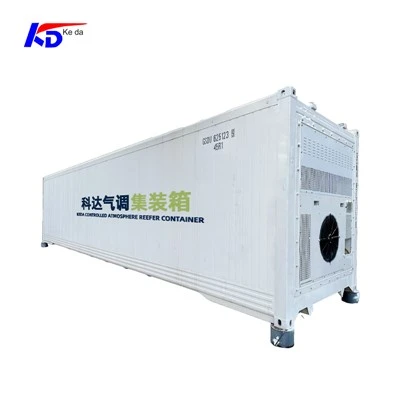
If you’re a ferry operator, a maritime fleet manager, or even a port authority looking to reduce emissions from your local ferry routes, our team has worked with vessels of all sizes across Europe, North America, and the Asia-Pacific. We don’t just sell equipment—we work with you to audit your ferry’s current emissions, design a system that fits your specific route and vessel constraints, and provide ongoing maintenance to make sure the system runs at peak performance. We understand that time is money in the ferry industry, so we can install our systems during regular dry-dock periods, without taking a ferry out of service for longer than 48 hours.
Intelligent CA Integrated Machines References:
- International Maritime Organization. (2023). 2023 Initial Strategy on the Reduction of GHG Emissions from Ships.
- Society of Marine Engineers. (2022). Marine Carbon Dioxide Removal Technologies: Adaptations for Vessel Applications.
- European Maritime Safety Agency. (2023). Ferry Emissions Mitigation: Case Studies of Modular CDR Installations.
- International Journal of Greenhouse Gas Control. (2021). Solid Amine Absorption Systems for Marine CO2 Capture.
Yantai Keda Zhixian International Trade Co., Ltd.
As one of the leading manufacturers and suppliers of carbon dioxide remover in China, we have world-leading production equipment and strong manufacturing capabilities. Please feel free to buy high-grade carbon dioxide remover for sale here from our factory.
Address: No.18-2, Wuhan St, Yantai ETDZ, Yantai, Shandong, China
E-mail: ytkeda2026@163.com
WebSite: https://www.kedacastorage.com/
