If you’ve ever ordered melamine board for a DIY shelf, a cabinet renovation, or a custom furniture build, you’ve probably stared at a bunch of measurements wondering, “Wait—how do I even pick the right size?” As a melamine board supplier, I get this question nonstop from builders, small shop owners, and even first-timers who just want to nail their home project without wasting money on the wrong material. Melamine is tough, budget-friendly, and way easier to work with than solid wood for most projects, but the size thing is where a lot of people slip up. Today, we’re breaking down the most common melamine board sizes you’ll run into, why they matter, and what I always tell my customers when they’re placing an order. Melamine Board
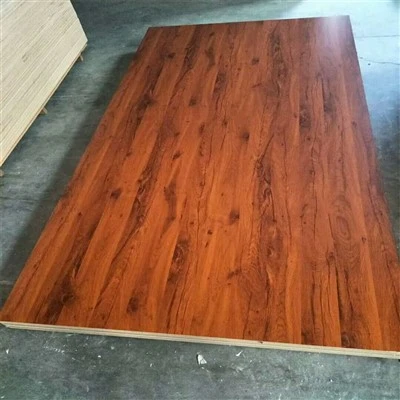
First off, let’s get one thing straight: melamine board (also called melamine-faced chipboard or MDF, depending on the core) isn’t a one-size-fits-all product. The core is usually either particleboard (fluffy, made of wood chips pressed tight) or MDF (medium-density fiberboard, smoother, more uniform), and both get that melamine plastic coating on top. The size of the sheet doesn’t just refer to length and width—thickness matters too, and it’s often the biggest source of confusion for new buyers. A lot of people come to me saying “I need a 4×8 sheet” and don’t realize that a 4×8 particleboard sheet is way different than a 4×8 MDF sheet, or that a ½-inch thickness is perfect for cabinets but not for a floating shelf. Let’s start with the big ones: the standard sheet lengths and widths that almost every supplier stocks, no exceptions.
The global workhorse here is the 4-foot by 8-foot sheet. For anyone in North America, this is the default size you’ll find at every big box store, every lumber yard, and yeah, at my warehouse too. Why is it so popular? Because it’s the same size as drywall sheets, plywood, and OSB—so all the saws, cutting guides, and workspaces most people have are built around this measurement. If you’re building a closet, cutting it down to fit a wall, or putting together a standard bookshelf, 4×8 is the go-to. It’s big enough to cut multiple pieces out of for small projects, not so big that you can’t haul it in a regular pickup truck (pro tip: get a friend to help you lift it—they’re lighter than solid wood, but they’re still unwieldy). We also carry this size in every thickness, so you can grab a thin one for a lazy Susan or a thick one for a desk top. That said, it’s not universal. If you’re in Europe, Asia, or most of the rest of the world, you’ll run into the metric standard: 1220mm x 2440mm. Wait, what? That’s exactly 4 feet x 8 feet, so it’s just the metric conversion. I get a lot of inquiries from international customers who are used to metric, so I always list both measurements on our product pages to avoid mix-ups.
Now, what if you need something bigger? For commercial projects—like building a whole wall of retail displays, or large cabinetry for a restaurant—we also stock a 5-foot by 10-foot sheet. Wait, hold on, that’s not a standard size everywhere? Yeah, it’s a bit less common than 4×8, but it’s a game-changer for jobs where you want fewer seams. A 5×10 sheet cuts down to one single piece for a big back cabinet, so you don’t have to hide a seam in the middle of a kitchen counter or a store wall. It’s a bit heavier, so you need a truck with a longer bed, but for commercial builders, the time and material savings from fewer cuts and less waste makes it totally worth it. I only stock this size in thicker core options (¾-inch and up) because thinner ones tend to warp if you handle big sheets too roughly, and commercial projects usually need that extra durability.
What about smaller sheets? A lot of people don’t think about this, but not every project needs a giant 4×8 board. If you’re doing a tiny DIY project—like a jewelry box, a plant stand, or a tiny shelf for a bathroom—smaller sheets are way more practical. We carry 2-foot by 4-foot melamine sheets too, and even some 3-foot by 5-foot options for mid-sized projects. These are perfect for when you don’t want to pay for a full big sheet just to cut it into small pieces, and they’re way easier to carry home alone. The only catch with small sheets is that some cheaper suppliers will cut a regular 4×8 sheet into smaller pieces and mark them up, so always check if you’re getting a true small sheet or a leftover cut from a big one. Our small sheets are pre-cut to exact dimensions, so no wasted edges, which is why a lot of hobbyists love them.
Now, the part that trips everyone up: thickness. I can’t tell you how many times a customer has ordered a 4×8 sheet of melamine, and when it arrives, it’s too flimsy for their desk. Thickness is just as important as length and width, and the common sizes are pretty straightforward. The thinnest you’ll find is ¼-inch, and that’s for tiny projects—like trim, backing for cabinets, or small decorative pieces. It’s cheap, easy to cut, but way too bendy for anything that needs support. Next up is ⅜-inch. This is a middle-ground thickness, good for things like drawer sides, small shelves, or under-cabinet organizers. It’s sturdier than ¼-inch, but still light enough to work with for DIYers. The most popular thickness by far is ½-inch. This is perfect for standard shelves, desk tops, cabinet doors, and bookcases. It’s rigid, doesn’t bend under weight, and balances durability with ease of cutting. A lot of people ask if ½-inch is overkill, and the answer is no—unless you’re building a 10-foot long shelf that will hold 50 pounds of books. Then you’ll want ¾-inch. That’s the thickest standard size, used for heavy-duty projects: kitchen cabinet frames, workbenches, large floating shelves, and anything that will hold a lot of weight. I always tell customers to size up a half-inch if they’re unsure—better to have something too sturdy than have a shelf sag a year after installation.
Wait, are there any other sizes I should mention? Yeah, the specialty ones that pop up for niche projects. For example, some custom furniture makers use 1-foot by 1-foot melamine squares for tile backers, or even smaller for art projects. We also carry custom sizes for contractors who need specific measurements for built-ins—like 2-foot wide sheets for a straight closet run, pre-cut to avoid on-site cutting mistakes. The only thing with specialty sizes is that they usually have a longer lead time, since we don’t stock them by default, and there might be a small upcharge for cutting. But for most regular projects, the standard sizes I mentioned are all you’ll need.
Now, a quick pro tip from a guy who’s been selling melamine board for 8 years: always double-check your measurements before you order. I’ve had customers order a 4×8 sheet when they needed 4×7, because they assumed it’s just a small difference, and then they have to pay to return the sheet. Another common mistake: mixing up MDF and particleboard cores. A lot of people say “melamine board” and don’t realize that MDF is smoother, better for painting, and a bit heavier, while particleboard is cheaper, more water-resistant (kind of—don’t submerge it), and lighter. We label every sheet clearly, so just ask if you’re not sure which core you need.
At the end of the day, melamine board sizes are pretty straightforward once you get the hang of it. The 4×8 (or 1220x2440mm) is the default, ½-inch thickness works for 90% of home projects, and if you need bigger or smaller, we’ve got you covered. If you’re working on a project and aren’t sure what size to grab, hit us up—we help builders, DIYers, and shop owners pick the right size and core all the time, no pressure, no hidden fees. We want you to get the right material on the first try, so you don’t waste time or money on something that doesn’t fit.
Whatever you’re building, melamine board is a solid choice—durability, style options, and price that beats solid wood. Just make sure you nail the size, and your project will turn out way better than you expected. If you need help with measurements, custom cuts, or just want to ask about stock, reach out anytime—we’re here to make your project go as smooth as possible.
Film Faced Plywood References
- Wood-Based Panels: Technical Data and Specifications, Wood Industry Association, 2022
- Common Panel Sizes for Construction and Furniture, Global Building Materials Database, 2023
- Melamine-Faced Board Selection Guide, National Association of Home Builders, 2021
Lisen Wood Industrial Shouguang Co., Ltd.
Lisen Wood Industrial Shouguang Co., Ltd. is one of the most professional melamine board manufacturers and suppliers in China, featured by quality products and low price. Please rest assured to buy discount melamine board from our factory. Welcome to contact us for quotation and free sample.
Address: Nongsheng road, shouguang,shandong province, china
E-mail: liuzhenxi@lisenboard.com
WebSite: https://www.sglswood.com/
