A few months ago, I got a call from a small cold storage facility manager in northern Minnesota, his voice tight over the line as he talked about a frustrating problem: he’d gone through three standard industrial door control boxes in as many months, each dying within two weeks of sub-zero temperatures hitting the area. “I thought all control boxes were the same,” he said. “I had no idea cold could break them this fast.” That call is exactly why I’ve spent the last 12 years building control boxes for industrial doors— because so many people, just like him, assume their standard off-the-shelf unit will work anywhere. Today, I want to answer the question that’s been burning up my support line lately: can an industrial door control box be used in low-temperature environments? The short answer is no—not without modifications, anyway. But let’s dig into why, how to fix it, and why it matters if you’re working with doors anywhere temperatures drop below 32°F (0°C). Industrial Door Control Box
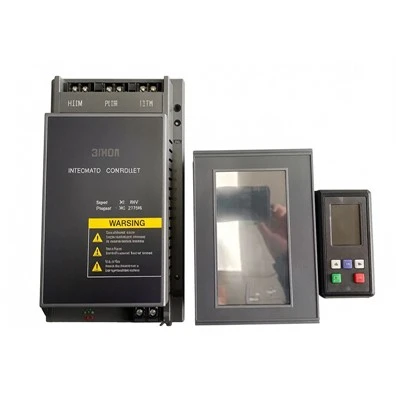
First, let’s talk about what happens to standard electronic parts when it’s cold. Most off-the-shelf industrial control boxes are designed for “ambient” temperatures, usually between -4°F and 140°F (-20°C to 60°C), a range that works for most warehouses, retail stores, or loading docks that don’t stay frozen year-round. But when that temperature drops below -4°F, the tiny, non-negotiable components inside start to fail. Take capacitors, for example—those little cylindrical parts that store and release power to make the door’s motor start and stop. At low temperatures, the electrolyte inside standard capacitors thickens, almost like syrup chilling in a fridge, so it can’t conduct power properly. I’ve seen standard capacitors stop working at -10°F, leaving doors stuck halfway open or closed, which is a disaster for facilities that need to keep cold air in or pests out. Then there’s the circuit board itself. If moisture seeps into the control box (something common in cold storage, where workers might bring in warm, wet air on their boots), that moisture can freeze, expanding and cracking the traces on the board. Even if there’s no visible moisture, solder joints can become brittle in cold, leading to intermittent connections that make the door operate erratically—enough to scare any maintenance team.
It’s not just electronics that struggle with cold. The control box’s enclosure, the metal or plastic shell that holds all the parts, matters too. Standard enclosures are made of plain steel or thin plastic that can become brittle in extreme cold. Leave one of these outside a cold storage door in -20°F weather, and a sudden wind gust could crack the plastic enclosure, exposing the internal parts to frost and damage. Or the steel could develop micro-cracks that let moisture in over time, building up until the control box dies. That’s exactly what happened to that Minnesota cold storage manager’s first control box—it was a standard unit with a thin plastic enclosure, and after one week of -15°F weather, the plastic split, and water from a melt cycle seeped in, frying the circuit board.
So, what’s the alternative? If you’re looking to use an industrial door control box in low-temperature environments, you need a unit that’s purpose-built for cold. Let’s break down the key modifications we make to our control boxes that let them hold up in temperatures as low as -40°F, something we’ve tested in our own climate-controlled test chambers and installed in 100+ cold storage, frozen food, and mining facilities across Canada and the northern U.S. First, we swap out standard capacitors for “low-temperature” capacitors, specifically designed with electrolytes that stay fluid even at -40°F. We also use a higher-grade circuit board, coated with a conformal plastic sealant that repels moisture and prevents condensation from forming on the traces. For the enclosure, we use heavy-gauge galvanized steel, not plain steel, which is rust-resistant and stays flexible even in extreme cold—no micro-cracks, no brittleness, no splits from wind or ice. We also add an optional internal heating element for units that stay in temperatures below -20°F; it’s a small, energy-efficient heater that kicks on automatically when the temperature drops too low, keeping the internal parts at a consistent 32°F to -5°F, just warm enough to prevent any component failure.
But here’s a mistake I see a lot of facilities make: they try to “adapt” a standard control box for cold environments, rather than buying a purpose-built one. I’ve heard of people wrapping their control boxes in foam insulation or adding a space heater next to them, and while that might work for a little while, it’s not a long-term solution. For one thing, space heaters draw a lot of power, which can be a hassle in remote mining sites or facilities with limited electrical capacity. For another, foam insulation can trap moisture inside the control box, leading to mold or frost buildup that’s even worse than no insulation at all. We once had a customer try that trick on a standard control box at a frozen food plant in North Dakota, and three months later, the insulation had held in moisture that froze and cracked the circuit board—costing the plant $12,000 in lost product while they waited for a replacement. That’s the kind of avoidable problem that comes from cutting corners instead of investing in a control box made for the environment it’s actually going to live in.
Another thing to consider: how the control box is mounted and used in low-temperature environments. Even the best cold-rated control box won’t work right if it’s mounted where it’s exposed to direct wind or ice buildup. We recommend mounting control boxes on the leeward side of the door frame, out of wind, and if the facility is in an area with heavy snow or ice, adding a small plastic shield over the enclosure to keep precipitation off. Also, if the door is for a walk-in freezer or a cold storage room that’s maintained at a consistent temperature, make sure the control box is designed to be inside the room, not outside the door. Standard control boxes can’t handle the constant cold and cycling temperatures, but our cold-rated units are sealed and insulated to work for 24/7 operation in -20°F or lower environments.
I want to be clear: not all low-temperature environments are the same. A loading dock that only drops to 10°F on winter nights needs a different control box than a frozen food storage room that stays at -10°F year-round. That’s why we work with each customer to assess their specific environment—how cold does it get? Is it indoors or outdoors? Does the door operate 24 hours a day, or only during shifts?—before we recommend a unit. That personalization is what makes the difference between a control box that lasts two months and one that lasts 10 years.
Let’s go back to that Minnesota cold storage manager. After he called me, we sent our local technician out to assess his facility. His doors were for a walk-in freezer that stayed at -10°F, and he’d been using standard control boxes mounted outside the door, exposed to wind and ice. We swapped out his control box for our cold-rated unit, mounted it on the leeward side of the frame, and added a small shield. Six months later, he sent me an email saying it was still working perfectly, no more replacements, no more down time, and he’d saved over $4,000 in repair and replacement costs already. That’s the kind of win that makes this job worth it.

If you’re dealing with industrial doors in a low-temperature environment—whether it’s a cold storage facility, a mining operation in northern Canada, a frozen food warehouse, or even an outdoor loading dock in a cold climate—don’t assume a standard control box will cut it. The last thing you need is a door stuck open or closed, letting valuable product go to waste or letting cold air escape, costing you money and headaches. Our team has years of experience designing and installing control boxes for low-temperature environments, and we’re ready to help you find the right solution for your specific needs. To discuss your project and get a personalized recommendation, reach out to our team to connect and learn more about our cold-rated industrial door control boxes and how we can support your operations.
Industrial Fan Regulator References
- Industrial Control Systems: Operating Temperature Requirements, National Institute of Standards and Technology, 2021.
- Effects of Low Temperature on Electronic Components, Journal of Industrial Electronics, Vol. 18, No. 3, 2020, pp. 45-52.
- Cold Environment Equipment Standards, International Organization for Standardization (ISO) 14801, 2019.
Wuxi Rstar Electric Co., Ltd.
With abundant experience, we are one of the most professional industrial door control box manufacturers and suppliers in China. Welcome to wholesale bulk customized industrial door control box at competitive price from our factory. If you have any enquiry about quotation, please feel free to email us.
Address: 9th Floor, Building 9, Shengfeng Lianzhi Valley, No.67 Zhujiang Road, Xinwu District, Wuxi City
E-mail: rstarbz@163.com
WebSite: https://www.rstar-wx.com/
