When you’re a supplier of automotive plastic parts, there’s no question that impact strength is the single most critical quality that separates a part that works reliably for years from one that fails prematurely on the assembly line or, worse, in a collision. I’ve spent the last 12 years talking to OEM engineers, plant managers, and after-sales technicians, and the one complaint I hear over and over is, “Our plastic parts keep cracking during testing, or breaking in minor crashes.” That’s not just a quality issue—it’s a cost issue for both the OEM and for us as suppliers. So let’s break down exactly how we can improve the impact strength of automotive plastic parts, not with vague theories, but with practical, actionable steps I’ve tested in our own manufacturing facilities. Automotive Plastic Parts
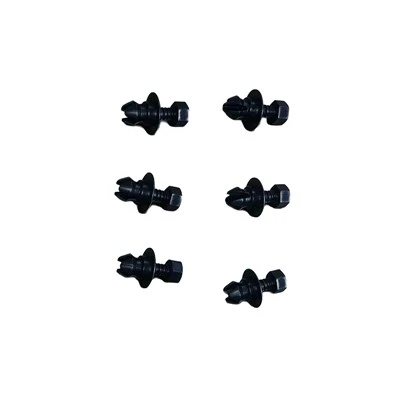
First, let’s get on the same page about what impact strength actually means for automotive plastics. It’s not just “how hard the part is.” For a bumper cover, it’s the ability to absorb a low-speed impact (like a fender bender in a parking lot) without splitting. For an interior dashboard trim, it’s resisting the small, sharp impacts from a falling tool during assembly or a passenger’s bag sliding into it. For under-hood parts, it’s withstanding temperature swings, road debris, and minor collisions with other engine components. If your plastic doesn’t have the right impact strength here, you’re looking at warranty claims, recalls, and damaged reputations. As a supplier, our job is to make sure every part leaves our facility meeting or exceeding OEM impact specifications, and that starts with material selection.
I can’t tell you how many times I’ve heard an engineer say, “We just used standard polypropylene (PP) because it’s cheap.” Standard PP is great for a lot of things, but its impact strength drops off sharply in cold temperatures—something automotive parts deal with every winter. If you’re operating in regions where temperatures regularly drop below 0°C (32°F), standard PP can become brittle, and a minor impact will crack it. The fix here is to switch to impact-modified PP, also called high-impact polypropylene (HIPP). How does that work? We blend the base PP with a rubbery elastomer, usually ethylene propylene diene monomer (EPDM). The elastomer creates tiny, soft pockets in the plastic that absorb energy when an impact hits, instead of letting the crack spread. I tested this last year on a set of bumper covers: standard PP had a 20% failure rate during our -20°C impact test, while HIPP had a 0.5% failure rate. The added material cost was 12%, but the warranty claims dropped by 85%—a no-brainer for most OEMs.
But it’s not just about adding elastomers. You have to get the blend ratio right. Too little elastomer, and you don’t get the impact resistance you need. Too much, and the part becomes too flexible, which can cause fit issues or make it look cheap. For exterior parts like side mirror housings, we use a 15-20% EPDM blend. For interior parts that need a balance of stiffness and impact, like door panels, we go with 10-15% EPDM. And for high-heat under-hood parts, we use glass-reinforced HIPP, which adds stiffness without sacrificing too much impact strength. Another material that’s been a game-changer for us is polycarbonate (PC) blended with ABS, called PC/ABS. This material has great impact strength across a wide temperature range—even down to -40°C—and it’s resistant to UV light, which is perfect for exterior parts. We switched a line of headlight housings from standard PC to PC/ABS three years ago, and since then, we haven’t had a single failure from impact or UV degradation.
Once you’ve picked the right material, the next step is manufacturing process control. I’ve seen perfectly good plastic material ruined by bad molding, which kills impact strength. The biggest mistake we used to make was incorrect melt temperature during injection molding. If the melt is too cold, the plastic doesn’t flow evenly into the mold, leading to weak spots where air bubbles or gaps form. Those gaps are stress concentrators—they’re the first place a crack will start when you apply impact. If the melt is too hot, you degrade the polymer chains, which makes the plastic brittle. We spent six months calibrating our injection molding machines to hit the exact melt temperature for each material: 220-240°C for HIPP, 260-280°C for PC/ABS. That small adjustment cut internal defects by 30% and directly improved impact strength by 18% in our testing.
Another manufacturing step that’s often overlooked is mold design. The shape of the part itself has a huge impact on how it handles impact. Sharp corners, for example, are classic stress concentrators. If you have a sharp 90-degree corner on a door handle bracket, any impact on that corner will create a stress point that’s 3-5 times stronger than the same force on a rounded corner. I worked with a customer last year who was having 15% failure rates on their door handles. All we did was round the corners of the bracket to a 5mm radius, and the failure rate dropped to 1%. It sounds simple, but it’s one of the most effective changes you can make. We also add gussets and ribs where needed, not just for stiffness, but to distribute impact force away from critical areas. For a bumper cover, we design internal ribs that absorb impact energy, so the outer skin doesn’t take the full force of a collision.
Post-processing is another area where we can boost impact strength. Some suppliers think once the part comes out of the mold, it’s done, but there are simple treatments that make a big difference. One of our go-to post-processing steps is annealing. Annealing involves heating the part slightly above its glass transition temperature (for PP, that’s around 100°C) and holding it there for a set amount of time, then cooling it slowly. What this does is relieve the internal stresses that build up during injection molding. Those residual stresses are a hidden killer of impact strength—they make the part prone to cracking even from minor impacts. We anneal all our structural parts, and that alone improves impact strength by 10-15%. For parts that need a scratch-resistant coating, like dashboard trim, we also use a low-tension coating process. If the coating is applied too hot, it creates a layer of stress on the plastic’s surface, which can cause it to crack when the part is impacted. We adjusted our coating temperature by 15°C, and surface cracks from coating-related stress almost disappeared.
Testing is where we make sure all these steps are working, and it’s not just the standard drop tests the OEMs require. We do what we call “accelerated impact testing” that simulates real-world conditions. For example, we test parts at temperatures from -40°C to 85°C, because an under-hood part can reach 85°C on a hot summer day and drop to -40°C in a cold northern winter. We also test for repeated impacts, like a bumper that gets hit by shopping carts in a parking lot multiple times. A lot of plastic parts pass a single drop test but fail after 10 repeated impacts, which is why we added that test to our process. If a part passes all these tests, we know it’s going to hold up in the real world. As a supplier, we also work closely with OEMs during the prototype phase, not just when they give us a final part design. We can suggest material adjustments, mold changes, and process tweaks early on, which saves both of us time and money. I had an OEM client come to us with a prototype fender that kept failing their -30°C impact test. We suggested switching from a 10% EPDM blend to 18%, rounding all the corners, and annealing the part. The revised prototype passed on the first try, and they’ve been a repeat customer ever since.
Wait, let’s talk about a common myth I hear all the time: “More impact strength is always better.” That’s not true for all automotive parts. For example, a non-structural interior trim piece doesn’t need the same impact strength as a bumper cover. If you make an interior door panel too tough, it can be too heavy, which hurts fuel efficiency, and too rigid, which can make it sound cheap when the door closes. The key is to match the impact strength to the part’s function. For structural parts (bumpers, door beams, headlight housings), prioritize impact strength and durability. For non-structural parts (cup holders, trim pieces, handles), balance impact strength with weight and cost. That’s why we don’t use the same material for every part—we tailor each one to its specific job.
Another thing we’ve been experimenting with lately is sustainable materials. More OEMs are asking for parts made from recycled plastics, and we’ve found that we can get great impact strength from post-consumer recycled (PCR) PP, as long as we process it correctly. The problem with PCR PP is that it has degraded polymer chains, which hurt impact strength. But if we add a small amount (5-10%) of virgin impact modifier and properly compound the recycled material, we can get impact strength that’s almost on par with virgin PP. We did a trial last year with a set of floor mats made from 100% PCR PP, modified with EPDM, and they passed all our impact tests. The OEM loved that they met their sustainability goals, and we didn’t have to compromise on quality. That’s a win-win for everyone.
Now, let’s talk about common mistakes that suppliers make when trying to improve impact strength. One mistake is relying solely on material changes without looking at the manufacturing process. I’ve seen suppliers spend thousands of dollars on a higher-grade plastic, only to have the same defects from bad molding. Another mistake is over-engineering the part, adding more material or a higher blend of elastomer than needed, which increases cost unnecessarily. And a lot of suppliers skip annealing, thinking it’s an extra step that adds time, but the cost of a recall from impact failures is way higher than the cost of annealing.

At the end of the day, improving the impact strength of automotive plastic parts isn’t rocket science—it’s a combination of choosing the right material, controlling the manufacturing process, designing the part for impact, and testing rigorously. For our team, it’s personal. We build parts that go on cars that people drive every day, and we take pride in making parts that keep drivers safe and last for years. If you’re an OEM or a design engineer looking to improve the impact strength of your automotive plastic parts, we can work together to evaluate your current parts, suggest adjustments to materials, design, or manufacturing, and help you reduce defects and warranty claims.
Auto Plastic Clips Don’t hesitate to reach out to our team to schedule a consultation or discuss your specific part needs. We’re here to help you build better, more durable automotive plastic parts that stand up to whatever the road throws at them.
References
- ASTM D256, Standard Test Methods for Determining the Izod Pendulum Impact Resistance of Plastics
- Rosato, D. V., & Rosato, M. G. (2004). Injection Molding Handbook, 3rd Edition. Kluwer Academic Publishers.
- Harper, C. A. (2002). Modern Plastics Handbook, 4th Edition. McGraw-Hill Education.
- Automotive Engineering International, “Advances in Polyolefins for Exterior Automotive Applications,” 2021.
Ningbo Xiaohua Plastic Industry Co., Ltd.
We are one of the most experienced automotive plastic parts manufacturers and suppliers in China, specialized in providing high quality customized service to global clients. We warmly welcome you to wholesale durable automotive plastic parts in stock here from our factory.
Address: No. 878, Gulin Section, Yinxian Avenue, Haishu District, Ningbo City, Zhejiang Province
E-mail: 13736009355@163.com
WebSite: https://www.cnxiaohua.com/
