Alright, let’s cut to the chase—if you’re knee-deep in industrial automation, you’ve definitely bumped into linear guides and slide tables, and if you’re sourcing motion control parts, you’ve probably wondered: which one do I actually need? I talk to people every single week who mix these two up, and honestly? I get it—they both look like linear motion parts, slide back and forth, and seem like they’d do the same job at first glance. But here’s the thing: they’re built for totally different scenarios, and picking the wrong one can turn a simple project into a headache fast. I’m a supplier of slide tables and linear modules, so I see this mistake all the time, and today I’m breaking down exactly what sets them apart, no stuffy engineering jargon (well, maybe a little, but I’ll explain it like we’re grabbing a coffee). Slide Table and Linear Module
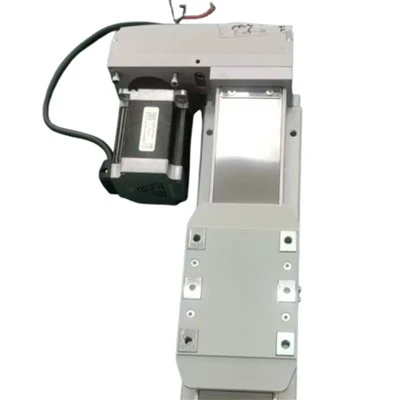
First, let’s start with the basics, the bare bones. A linear guide, sometimes called a linear rail or a linear slide, is pretty much two separate parts: a long metal rail mounted to your machine frame, and a small moving carriage that bolts onto whatever you need to slide. The carriage has ball bearings (or sometimes rollers) inside that roll along the rail, so it glides super smoothly with almost no friction. Slide tables, on the other hand? They’re a self-contained unit. They have the rail, the carriage, the mounting surface, and often even a drive system built right in—no extra parts, no guessing if the rail is aligned correctly.
Wait, let’s test that with a real example, okay? If you’re building a custom packaging machine, and you need a small part that moves 10 inches back and forth, a linear guide would be easy here—you can buy a 1-meter rail, trim it to size, bolt it down, and attach your custom part to the carriage. But if you need a whole self-contained unit that you can drop into a CNC router for a parts pick-and-place station, or a medical device dispensing system? A slide table is like a plug-and-play piece that’s ready to go right out of the box. That’s the first big difference: integration vs. assembly from scratch.
Next up, size and rigidity—this is where a lot of people get tripped up. Linear guides are long, thin, and designed for long travel distances, right? I’ve sold linear rails up to 10 meters before for big automotive stamping lines, where you need a part to move 8 feet across a car body. They’re rigid enough for heavy loads, but because the rail is separate, if you don’t mount it perfectly level or aligned, you’ll get friction, noise, and even premature wear. The carriage on a linear guide is also pretty small, so if you have a really big, heavy load, you might need two or three carriages spaced out, which adds extra work.
Slide tables? They come in a wide range of sizes, from tiny 50mm ones for electronics assembly (think moving microchips under a laser) up to 1 meter of travel for heavy equipment, but their travel is almost always shorter than a comparable linear guide. The tradeoff? They’re way more rigid in small to medium loads because the whole unit is a single, precision-machined piece. No extra mounting, no alignment headaches. I had a customer last month who was building a small test rig for lab equipment; they tried a linear guide first, and they spent three days trying to get the rail level enough that the tiny 2kg load wouldn’t wobble. Switched to a mini slide table, and it was running the same day, no fuss. That’s a concrete win for slide tables in tight, precision small builds.
Load capacity’s another area where the lines blur, but not the way you think. Linear guides can handle way heavier total loads when you space multiple carriages along a long rail. For example, a 2-meter rail with four carriages can hold 5,000kg total for large scale material handling. But if you’re talking about a single carriage, a slide table often has a higher load per unit length because of its integrated design, no gaps between rail and carriage. I see people mix these up all the time: “I need to lift 200kg, so I’ll get a linear rail” but actually, a mid-sized slide table handles 200kg just fine, and it’s way simpler to install. If you need over 500kg total load, though, linear guides are almost always the go-to, because slide tables that big get bulky and expensive.
Precision and accuracy—this is where the real tech stuff comes in, I’ll keep it simple. Linear guides have super high positional accuracy, like plus or minus 0.02mm over a meter of travel, but that accuracy drops off if the rail isn’t perfectly installed. Align a 3-meter rail even 0.1mm off level, and your end accuracy is garbage. Slide tables, on the other hand, have built-in precision machining, so their accuracy is consistent across their entire travel, usually around plus or minus 0.01mm, because they’re machined as a single unit. No alignment needed. That’s why they’re used in applications like 3D printers, where every tiny millimeter counts—you don’t want a linear guide’s alignment error messing up a print.
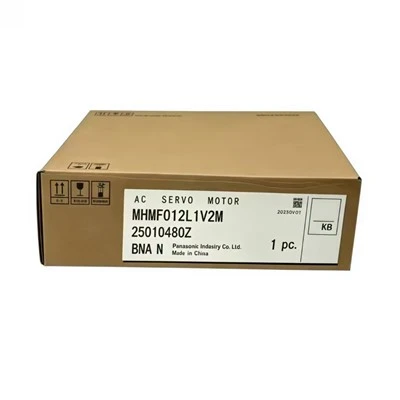
Drive systems are the next big differentiator, and this is where my linear module expertise comes in too, by the way. Linear guides alone don’t have a drive system—you have to add a stepper motor, servo motor, belt, or leadscrew to move the carriage. So you’re mixing and matching parts, which can lead to compatibility issues. Slide tables almost always come with a drive system already integrated, either belt-driven for long, fast travel, or leadscrew-driven for high torque and precision. Linear modules? Wait, that’s another part I should mention because a lot of people mix slide tables and linear modules too. Linear modules are basically a step up from slide tables—they have the same integrated drive system, but they’re built for even longer travel, higher speeds, and heavier loads. So a slide table is great for short, precise, self-contained moves, a linear module is for when you need that same integrated setup but for travel over 1 meter, or for faster speeds.
Let me wrap my head around a few common use cases to make this real, because theory is useless without examples. When do you use a linear guide? Large-scale material handling, like moving pallets in a warehouse or parts across an automotive assembly line, where you have to mount the rail to a big structure, and you need travel over 2 meters, and you want the flexibility to adjust the setup later. When do you use a slide table? Small to medium automation, like pick-and-place for electronics, CNC router axes, medical devices, or small 3D printer axes, where you want something plug-and-play, high precision, and easy to install without a full assembly.
Wait, I should address a common myth here: “Slide tables are only for small loads.” No, not at all. We make slide tables that handle up to 1000kg, they just look different than linear guides because they’re a single unit. And “linear guides are always better for long travel”—again, mostly true, but some high-end slide tables have travel up to 1.5 meters, which is enough for a lot of small to mid-size projects.
Now, why does this matter for you, the person reading this? If you’re designing a new automation setup, wasting time or money on the wrong part is the worst. If you spend hours aligning a linear rail, when a slide table would have done the job in 10 minutes, that’s lost time. If you buy a slide table that’s too small for your load, that’s wasted money. That’s why I always ask customers three questions first: How long is the travel you need? How much weight are you moving? How precise does your movement need to be? Those three answers will tell you exactly which one you need.
For example, last week a customer reached out, asking for a linear guide for a 500mm travel axis for a packaging machine. I asked about load, they said 150kg, precision needs to be within 0.05mm. I told them a mid-sized slide table would be perfect, way easier to install, and actually met their precision needs better than a linear guide, because they wouldn’t have to deal with alignment. They came back an hour later saying that saved them $800 on installation time, and they avoided a mistake that would have shut down their production for two days. That’s the stuff I live for, helping people skip the hassle.
If you’re not sure which one to pick—if you’re mid-project, stuck on a design, or just curious about upgrading your current setup—reach out. I’ve worked with small startup teams and big manufacturing plants, so I can walk you through the options, no sales pitch, no pressure. Just honest advice based on actual experience with these parts, not just spec sheets.
Before I go, let’s recap the key differences to make sure you don’t forget: Linear guides are separate rail + carriage, long travel, good for heavy loads over 500kg, require alignment. Slide tables are self-contained units, short to medium travel, easy to install, high precision for small to medium loads. Linear modules are the middle ground for when you need integrated drive systems with longer travel than a slide table.
Don’t overcomplicate it. If you want fast, simple, precise, go with a slide table. If you need long travel, heavy loads, and don’t mind assembling parts, go with a linear guide. If you want that same integrated setup but for travels over a meter, a linear module is the sweet spot.
Now, if you’re ready to source parts, or just have questions about your specific project, don’t hesitate to reach out for a chat about pricing, specs, or custom modifications. I’m here to help you pick the right part, not just sell you something.
Manipulator References: 1. Industrial Motion Control Association. (2022). Linear Motion System Design Standards. 2. Technical Paper on Slide Table vs. Linear Guide Application, Motion Components Journal. 3. Automation World, 2023, “Choosing the Right Linear Motion Component for Precision Applications.”
Yangning (Xiamen) Intelligent Technology Co., Ltd.
With abundant experience, we are one of the most professional slide table and linear module manufacturers in China. As we have world-leading production equipment and strong manufacturing capabilities, we warmly welcome you to buy bulk advanced slide table and linear module from our factory. Customized orders are welcome.
Address: Room 307-2, No. 15 Duiying Road, Software Park Phase III, Torch Hi-Tech Zone, Xiamen, Fujian, China
E-mail: mia@ynautos.com
WebSite: https://www.ynautos.com/
