Hey there! I’m a supplier of CNC centerless grinders, and I’ve been in this game for quite a while. One of the most common questions I get from customers is how to measure the grinding accuracy of a CNC centerless grinder. It’s a crucial aspect, as the accuracy directly impacts the quality of the finished products. So, in this blog, I’m gonna share some tips and methods on how to measure that accuracy. CNC Centerless Grinder
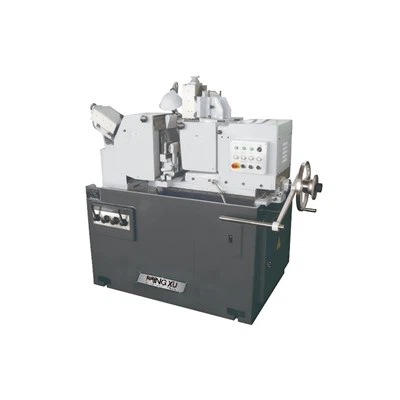
First off, let’s understand what we mean by grinding accuracy. In simple terms, it refers to how closely the ground part matches the desired specifications. This includes dimensions like diameter, roundness, straightness, and surface finish. Measuring these aspects accurately is key to ensuring that the grinder is performing at its best.
Measuring Diameter
One of the most basic measurements is the diameter of the ground part. To measure the diameter accurately, you can use a micrometer or a caliper. These tools are pretty straightforward to use. Just place the jaws of the micrometer or caliper around the part at different points along its length. Make sure to take multiple measurements to account for any variations.
For more precise measurements, you can use a coordinate measuring machine (CMM). A CMM uses a probe to touch the surface of the part and records the coordinates. This allows you to get a detailed 3D model of the part and measure the diameter with high accuracy. However, CMMs are more expensive and require trained operators to use them.
Another option is to use an optical measuring system. These systems use cameras and lasers to measure the diameter of the part. They are non – contact, which means they won’t damage the part during measurement. Optical measuring systems can also measure other features like roundness and surface finish simultaneously.
Measuring Roundness
Roundness is another important aspect of grinding accuracy. A perfectly round part should have a constant radius at all points around its circumference. To measure roundness, you can use a roundness tester.
A roundness tester works by rotating the part on a spindle while a probe measures the distance from the center of the part to its surface. The tester then calculates the roundness error based on the variation in these distances. The most common way to express roundness is through the form error, which is the difference between the maximum and minimum radii of the part.
There are also some simple methods to check roundness manually. You can place the part on a V – block and use a dial indicator to measure the variation in the height of the part as it rotates. While this method is less accurate than a roundness tester, it can give you a rough idea of the roundness of the part.
Measuring Straightness
Straightness is crucial, especially for parts that need to fit precisely into other components. To measure straightness, you can use a straightedge and a feeler gauge. Place the straightedge along the length of the part and use the feeler gauge to measure the gap between the straightedge and the part at different points.
For more accurate measurements, you can use a laser interferometer. A laser interferometer works by sending a laser beam along the length of the part and measuring the interference pattern created when the beam reflects off the part’s surface. This allows you to measure the straightness with high precision.
Measuring Surface Finish
The surface finish of a ground part can have a big impact on its performance. A smooth surface finish can reduce friction, improve wear resistance, and enhance the overall quality of the part.
To measure surface finish, you can use a surface roughness tester. These testers work by dragging a stylus across the surface of the part and measuring the variations in the surface height. The tester then calculates the surface roughness parameters, such as Ra (arithmetical mean deviation of the profile) and Rz (mean peak – to – valley height).
There are also visual inspection methods to get a general idea of the surface finish. You can use a magnifying glass or a microscope to look at the surface of the part and check for any scratches, pits, or other defects.
Factors Affecting Grinding Accuracy
Now that we know how to measure grinding accuracy, let’s talk about some of the factors that can affect it.
One of the main factors is the quality of the grinding wheel. A worn – out or poorly dressed grinding wheel can cause uneven grinding and reduce the accuracy of the part. It’s important to regularly dress the grinding wheel to keep it in good condition.
The coolant used during the grinding process also plays a role. Coolant helps to reduce heat and prevent the part from warping. If the coolant is not properly mixed or circulated, it can lead to inaccurate grinding.
The machine itself can also affect the grinding accuracy. Factors like the stability of the machine, the alignment of the grinding wheel and the workpiece, and the precision of the feed system can all impact the final accuracy of the part.
Tips for Improving Grinding Accuracy
Here are some tips to help you improve the grinding accuracy of your CNC centerless grinder:
- Regular Maintenance: Keep the grinder clean and well – maintained. This includes checking and lubricating the moving parts, dressing the grinding wheel, and ensuring that the coolant system is working properly.
- Proper Setup: Make sure the workpiece is properly aligned and secured in the grinder. Incorrect setup can lead to inaccurate grinding.
- Use High – Quality Tools: Invest in high – quality grinding wheels, coolant, and measuring tools. Using cheap or low – quality tools can compromise the accuracy of the grinding process.
- Operator Training: Ensure that the operators are well – trained in using the CNC centerless grinder. They should know how to set up the machine, adjust the parameters, and measure the accuracy of the parts.
Conclusion

Measuring the grinding accuracy of a CNC centerless grinder is essential for producing high – quality parts. By using the right measurement tools and techniques, and taking into account the factors that affect accuracy, you can ensure that your grinder is performing at its best.
Centerless Grinding Machine If you’re in the market for a CNC centerless grinder or need more information on improving grinding accuracy, don’t hesitate to reach out. We’re here to help you make the right choice and get the most out of your grinding operations.
References
- "CNC Machining Handbook"
- "Grinding Technology: Theory and Applications of Machining with Abrasives"
- "Precision Manufacturing Technology"
Wuxi Mingxu Machinery Equipment Co., Ltd.
As one of the most professional cnc centerless grinder manufacturers and suppliers in China, we’re featured by quality products and good price. Please rest assured to buy the best cnc centerless grinder for sale here from our factory. Also, custom service is available.
Address: No. 5-5 Jinke Wealth Plaza, Changjiang North Road, Xinwu District, Wuxi City, Jiangsu Province
E-mail: yingyingmxjd@163.com
WebSite: https://www.mingxu-china.com/
